Taking science AND faith seriously.
Episodes

Dec 9, 2019
Dec 9, 2019
19 min
Paul, still missing his Watson Bill, opens up a discussion about questions of economics and political science, ranging from rural U.S. parishes to the geopolitics of an ideal future.
This podcast's title and logo were inspired by the "What Should I Do?" discernment retreat put on by the Indy Catholic young adult ministry this past weekend.
Dec 2, 2019
Dec 2, 2019
17 min
For my money, it's harder to believe in the Christian Last Things of life after death, judgment, and the end of the world than it is to believe in the "First Things" of creation and providence. The prophetic and apocalyptic literature of the Bible predict, or seem to predict amid very strange language, some very difficult things to square with our expectations both for the physical universe and for human technology:
- What could this "new heavens and a new earth" possibly be?
- How could Jesus appear in the heavens at the end of time if the human race has colonized multiple planets, or multiple solar systems, or multiple galaxies?
On the other hand, some of the predictions seem very possible, like the world being destroyed by fire (e.g., 2 Peter), which could take the form of several astronomical phenomena or our own nuclear holocaust.
In this episode, Paul sashays a bit into this even less frequented frontier region between science and Catholic doctrine.
Nov 25, 2019
Nov 25, 2019
36 min
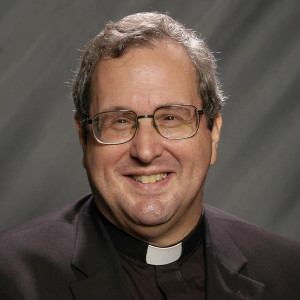
Unfortunately, this week Paul got deathly ill and that prevented us from recording the promised "end of the world" episode. Here instead is a re-edited version of Bill's interview with Fr. Robert Spitzer from August 2018 (originally run as Episode 20). One of our earliest interviews and still, amid all the great guests who have given time to this little podcast, one of the best.
Nov 18, 2019
Nov 18, 2019
25 min
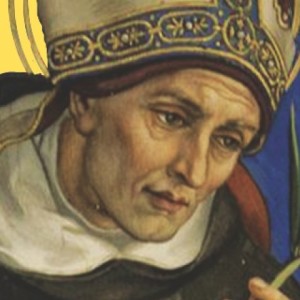
Today's episode is a rundown of the Indianapolis Gold Mass, followed by a short selection of readings from Scripture and a bit about Albert the Great specifically, with a scrap of meditation on the vocation of a scientist.
- Gold Masses for those in the natural sciences were celebrated in a dozen cities on Nov. 15, the feast day of St. Albert the Great, who is the patron saint of natural scientists. One of those Masses, as described by TSSM co-host Dr. Paul Giesting, took place in Saints Peter and Paul Cathedral in the Archdiocese of Indianapolis.
- The Society of Catholic Scientists is the pre-eminent sponsor/supporter of these Gold Masses as part of an initiative established relatively recently. The Society’s website contains a page where the most comprehensive listing of planned Gold Masses is compiled.
- What is a Gold Mass? The SCS provides this information.
- Here are details of the life of St. Albert the Great.
- The Criterion, newspaper of the Indianapolis Archdiocese, is expected to publish an article about the Nov. 15 Gold Mass in early December.
Nov 11, 2019
Nov 11, 2019
22 min
- Today's episode is getting recorded in a tight slot on Sunday night. Bill is out of town at a workshop on self-publishing and Paul has spent an awful lot of time over the last three days peering into the engine bay of a 1987 Jeep Wrangler and screwing and unscrewing things.
- Robert Barron and Brandon Vogt pulled excerpts from the Joe Rogen - Dawkins interview and spent two weeks rebutting them. That's one point of departure for today's episode. The other, of course, is that the feast of Albert the Great is this coming Friday, meaning Gold Mass season is at its frenzied (?) peak, and Albert the Great is one of the cast of figures who put together the great medieval synthesis of Catholic Christian thought with Aristotelian philosophy and science. I myself just finished a curious old book called Roman Science by William Stahl, and that will probably also be in the back of my head as I riff a bit. (Yes, for tonight I'm writing the liner notes first and attempting to monologue to fit them.)
- Bill has an ebook, hence the self-publishing drive: When Headlines Hurt, Do We Have a Prayer?
- Get up to date listings on Gold Mass locations and times!
Nov 4, 2019
Nov 4, 2019
24 min
- This week Bill prods Paul along as he recovers from a massive proposal hangover. This week's episode is the end of a much longer conversation that may or may not otherwise remain on the cutting room floor about Jordan Peterson and other topics as far afield as Homestar Runner.
- We run down the list of Gold Masses that have been publicly announced to take place this coming month--featuring such highlights as a Mass celebrated by the Bishop of Bismarck, ND and a talk at Benedictine University in Lisle, IL on "The Mystery of Faith: from the Gold Mass to Gravity Waves."
- From there, we segue to discussing how in the contemporary world people try to fill to gaping hole left by religion with politics even more than science, and we finish with Bill's comments on one of Jordan Peterson's messages in an interview with Patrick Coffin on the essential role that living our own lives well plays in changing the world.
Nov 1, 2019
Oct 28, 2019
Oct 28, 2019
17 min
- Dr. Jonathan Lunine is the David C. Duncan Professor in the Physical Science and chair of the Department of Astronomy at Cornell University. He is also the vice president and a co-founder of the Society of Catholic Scientists.
- In this “part 5” of our interview, Dr. Lunine notes that planetary science was not always a distinct field. It drew upon components of astronomy or the geological study of the moon, for example. Astrobiology, with a goal of studying microbial life forms that may be found on exoplanets, is now at the point of relative infancy where planetary science stood about 50 years ago.
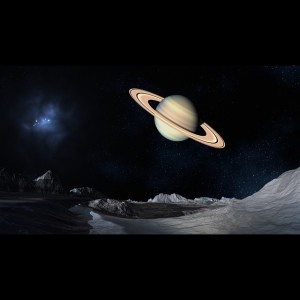
- Enceladus, one of the dozens of moons orbiting Saturn, is one site worth inspecting in the search for life. It could be based on carbon-bearing molecules different from those found in Earth life. The Cassini mission reported on plumes of water vapor and ice emanating from that moon. Dr. Lunine was part of a group proposing a mission called Enceladus Life Finder.
- Saturn’s moon Titan has seas filled with liquid methane. Could there be a form of biochemistry that works in liquid methane? It’s worth looking for, Dr. Lunine said.
- The Society of Catholic Scientists, with more than 1,000 members, is expanding its activities. The international group’s next annual meeting will consider the possibility of extraterrestrial life and the implications of such discoveries relevant to faith. The conference will be held in June 2020 at Providence College.
- Image by Reimund Bertrams from Pixabay
Oct 21, 2019
Oct 21, 2019
12 min
In this week's episode, we discuss the possibility of extraterrestrial life in our own solar system. Dr. Lunine talked about extraterrestrial life. It’s very possible that at least microbial life exists on other planets, he said, but the chances of complex, multicellular life are much more difficult to estimate.
We simply don't know what the possibilities are for life beyond the chemistry that it uses here on Earth. A potential tragedy that we would want to avoid at almost any cost would be the introduction of terrestrial microbes into a viable environment elsewhere, where they could become invasive species, grow and potentially outcompete the native life, which we would never get the chance to study and understand. NASA and other space agencies have policies in place to address this risk... hopefully, they will work.
Dr. Jonathan Lunine is the David C. Duncan Professor in the Physical Science and chair of the Department of Astronomy at Cornell University. He is also the vice president and a co-founder of the Society of Catholic Scientists.
Christianity and Extraterrestrials?: A Catholic Perspective , by Marie George, is a book worth reading, Dr. Lunine said.
He thanked all those who spoke at the 2019 conference of the Society of Catholic Scientists, and he commented on the high quality of the event. The website provides links to several TSSM episodes interviewing conference speakers.
Watch videos of speakers here.
Image by Reimund Bertrams from Pixabay
Oct 14, 2019
Oct 14, 2019
12 min
- Dr. Jonathan Lunine is the David C. Duncan Professor in the Physical Science and chair of the Department of Astronomy at Cornell University. He is also the vice president and a co-founder of the Society of Catholic Scientists.
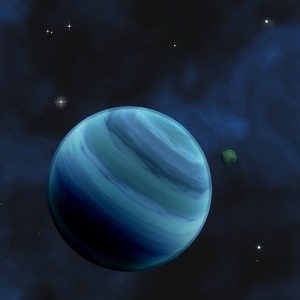
- In this “part 3” of our interview, Dr. Lunine talked about exoplanets. The discovery of planets outside our Solar System has revolutionized planetary science.
- The Kepler space telescope mission, with its nine-year voyage which ended last year, made possible the detection of thousands of planets. It’s now understood, Lunine said, that planet formation is a common part of star formation.
- Lunine noted that Cornell University, where he is on the faculty, has many new avenues of astrophysics and planetary science research. The Carl Sagan Institute hosts a multidisciplinary team studying exoplanets.
- Half of this year's Nobel Prize in Physics went to Michel Mayor and Didier Queloz for their discovery of the first exoplanet around an ordinary star.