
Taking science AND faith seriously.
Episodes
Oct 7, 2019
Oct 7, 2019
7 min
- Dr. Jonathan Lunine is the David C. Duncan Professor in the Physical Science and chair of the Department of Astronomy at Cornell University. He is also the vice president and a co-founder of the Society of Catholic Scientists.
- In this “part 2” of our interview, Dr. Lunine cited the book Secularity and Science by Elaine Ecklund (mentioned and linked in episode 79) and co-authors. The perceived conflict between faith and science is largely a Western phenomenon, according to Ecklund’s research, and it’s especially visible in the United States. Elsewhere, cultural education more fully incorporates an education about religion, so these people are more comfortable with the integration of the two.
- He said Catholic news services and The Christian Science Monitor are among the organizations where journalists are more likely interested in the combination of topics in science and religion.
Sep 30, 2019
Sep 30, 2019
37 min
- Dr. Jonathan Lunine is the David C. Duncan Professor in the Physical Science and chair of the Department of Astronomy at Cornell University. He is also the vice president and a co-founder of the Society of Catholic Scientists.
- Here is information about the Vatican Observatory. It was one of the starting points for Lunine’s exploration of the compatibility between science and the Catholic faith.
- He met Stephen Barr in 2014, and this led to their discussions about establishing the Society of Catholic Scientists. Here is a talk given by Barr at the University of Chicago.
- Here is a talk by Lunine about Georges Lemaitre, a Catholic priest recognized as an originator of the Big Bang theory. In our conversation, Lunine described a presentation on Lemaitre that he gave at Cornell as a kind of “coming-out party” for him as a Catholic convert with his own story to tell. He has addressed Catholic students with the advice to share one’s faith story but to be judicious, following the practice of St. Paul, who adapted his messages to his audiences. A recommendation for discussions of faith: “There’s a time and a place for everything.”
- Lunine mentioned Elaine Ecklund, who has studied what scientists think about the American culture’s understanding that science and religion are incompatible. Harvard physicist Lisa Randall, who has said belief in God is incompatible with science, is an example of the resistance to faith that many scientists encounter in academia, Lunine said. Our culture gives much credibility to scientists, who owe it to their audiences to be clear about when they are speaking as individuals rather than scholarly experts. Lunine also mentioned the Thomistic Institute, which has a chapter on the Cornell campus founded by a graduate student.
- Part of the difficulty in the dialogue between science and religion is a popular but erroneous view that the Bible was intended to be a book of science. Here is a discussion of St. Augustine’s examination of this claim. Another challenge, Lunine said, is that our children generally grow up without a substantive education in religion.
Sep 23, 2019
Sep 23, 2019
28 min
- Father John Hollowell is a priest of the Archdiocese of Indianapolis. He is well-known for his blog, “On This Rock.” His pastoral duties include parish leadership and chaplain roles at DePauw University and the Putnamville Correctional Faciltiy.
- Fr. Hollowell spoke with Paul Giesting about the number of priests throughout history who have also been active as scientists. Here is one list of priest-scientists provided by National Catholic Register.
- Pope John Paul II created a commission to review the Galileo Affair, and this resulted in documents officially apologizing for the Catholic Church’s historic, and hyperbolized dispute against Galileo’s statements.
- Here is a link to the book that was discussed: Steven Pinker’s The Blank Slate: The Modern Denial of Human Nature.
- Fr. Hollowell and Paul discussed the long-running football rivalry between DePauw University and Wabash College.
- See Fr. Hollowell online at Facebook and YouTube. And also see his interview with well-known digital Catholic voice Brandon Vogt.
Sep 16, 2019
Sep 16, 2019
9 min
Paul here. A short episode this week. We're taking a little time off to celebrate the milestone of releasing our last SCS 2019 conference speaker interview with Megan Levis last week.
The pace of interviews is likely to slow a bit, but we have several that we're looking forward to. Next week we have Fr John Hollowell, an engaging priest, campus minister, prison chaplain, blogger and social media personality here in the Archdiocese of Indianapolis. We will be talking to Jonathan Lunine again soon to further explore his fascinating perspective. Bill is in discussions with John Cavadini, theologian at Notre Dame, and hopefully we will get the chance to explore some issues related to education and culture from a Catholic perspective. Paul is also getting ready to record the first version of a talk on faith and science in his own life that he hopes to begin giving at colleges and perhaps parishes, which we will release here as well.
Discussions are still underway for Gold Masses here in central Indiana. It's possible that Indiana University, IUPUI in Indianapolis, Rose-Hulman Institute of Technology, and Purdue University might have Gold Masses, depending on whether more people get involved and help make the events happen.
Now some thoughts from Bill:
- Friends, this episode is a short, simple, heartfelt note befitting an approach that has been at the heart of “That’s So Second Millennium” right from its start nearly a year and half ago. The approach springs from the vision that prompted Dr. Paul Giesting to start this podcast and which resonated strongly with Bill Schmitt—yours truly, Paul’s co-host and the “show notes” writer.
- What is the vision? As Paul says at the beginning of each episode, “we look forward to the new synthesis in the new millennium between faith, philosophy and science.” We seek to celebrate continuous inquiry in all three fields by talking with great guests about how their own pursuits of knowledge and wisdom have brought deeper, broader insights from which we all can benefit. There’s good reason to pursue the benefit because this third millennium has brought us more challenging questions which must be addressed with a full toolkit for understanding.
- Inspired by our passion to spread updated, holistic, well-grounded understanding of many aspects of human life, visible and invisible, this podcast aims to generate authentic conversations with you, our listeners. The authenticity includes candor about another aspect of life in this millennium (or any millennium): It’s tough out there on Planet Earth. One must give voice to the frustrations marking our past, present and future as earthen vessels who are called to carry forward graces inextricably submerged in mystery. Paul’s inviting us to share the frustration and mystery with him in order to deepen our conversations.
- It’s our intention to continue expanding the conversations on our side of the podcast. If we don’t do that, there’s no chance to help achieve the synthesis that can bring greater happiness and healing in our very exciting world of cracked pots. Paul outlines some of our planned interviews and collaborations as an invitation for greater outreach on your side of the podcast. Let’s keep the amazing momentum of 77 episodes going and growing!
Sep 9, 2019
Sep 9, 2019
30 min
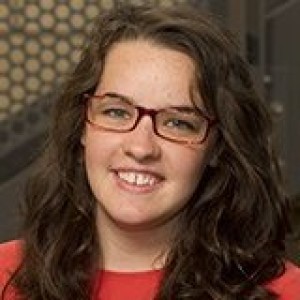
- This is the second half of TSSM’s interview with Megan Levis. We talked at greater length about this graduate student’s research and its good fit with values-informed thought, with the Society of Catholic Scientists, and even literature. The Society held its third annual conference at the University of Notre Dame a few months ago.
- In Megan’s presentation to the scientists at the SCS annual conference, she posed the question: How do you distinguish and exercise ethical responsibilities when something like brain organoids are “made in the image and likeness of man rather than the image and likeness of God.” Organoids are multicellular systems built from brain tissue. Are they just cell cultures or something so akin to the human being—particularly when they are brain organoids—that ethical duties arise out of respect for human dignity? This is a relatively new field where the scientific understanding and moral consideration still must develop in tandem, she explained. A New York Times article touched on some of the questions being raised.
- Megan’s own main research project as part of her graduate studies at Notre Dame deals with microfluidics. They are devices, a kind of miniature bio-reactor, in which researchers can grow cells and small organs. Her goal is to make it easier and less expensive to make microfluidics that can be used in future research. Here are resources on microfluidics from the journal Nature.
- Her collaborations in this area came about from her meeting with a leader in microfluidics technology, Dr. Fernando Ontiveros, while they were both attending a previous SCS conference. His team is exploring new applications for microfluidics, such as the growing of organoids.
- At what point should moral concerns tied to the dignity of the human person “kick in” when dealing with the brain and brain organoids? Where do you as a person reside in the body? The existence of a capacity for rational thought is a conventional scientific benchmark for the existence of personhood, Megan said. There are many theories of the complex brain-mind-body connection with personhood. The human person is a complex creature, not reducible to the brain or body alone. Here’s an exploration of some insights from National Geographic.
- There is a real role for literature in helping us to explore the many questions that combine operational questions of engineering and more abstract, integrated thinking about persons, Megan says. She recommends renowned author Walker Percy, who explored such subjects in Lost in the Cosmos: The Last Self-Help Book. He comments that being a human is inevitably an uncomfortable process involving tensions within our nature. Our culture tends to look to science for answers to the big questions of human nature, but literature and art are pathways to answers too; literature allows us to think without predispositions and suppositions, to discover truths about ourselves and the world that transcend scientifically measurable parts. As Megan put it, the ability to wonder about the world is a gift that is transmitted sometimes through engineering and sometimes through literature and art.
- Megan has been able to work with Ontiveros while he has done research and prepared journal articles at Notre Dame. With the support of mentors and advisors, she has embraced opportunities at Notre Dame and elsewhere to spend time thinking about faith and science in relationship. She attended a conference with like-minded graduate students interested in these connections. She has appreciated the insights of SCS president Stephen Barr and microbiologist Fr. Nicanor Austriaco, OP, a speaker at this year’s SCS conference. Barr is the author of Modern Physics and Ancient Faith. Austriaco has recorded a podcast available through the Thomistic Institute titled The Science and Practice of Christian Prayer.
- What does Megan recommend for graduate students and others who want to advance in their bioengineering studies while staying informed and mindful about the faith-related aspects? She highlights the power of community, building friendships and conversations over time with a diverse range of people on similar journeys, including philosophy and science. One can attend relevant lectures and conferences, such as those sponsored by Notre Dame’s De Nicola Center for Ethics and Culture. She recommends the resources of the Collegium Institute. Building and updating such mindfulness is a long-term process requiring persistence, she adds.
Sep 2, 2019
Sep 2, 2019
23 min
- Megan Levis is a fifth-year graduate student in bioengineering at the University of Notre Dame. The topic of her talk at the annual conference of the Society of Catholic Scientists was “Created in the Image and Likeness of Man.” She described the University’s bioengineering program.
- Growing what can be deemed the beginnings of a human brain, for purposes of research, invites important ethical considerations. Levis has found resources at and through Notre Dame for deeper study of the responsibilities entailed in such research. She has worked with the John J. Reilly Center on science, technology and values. She has also been part of the Leadership Advancing Socially Engaged Research (LASER) program within the Graduate School.
- Levis participated in an NSFsupported workshop on engineering design principles of multicellular living systems. Such workshops reflect a growing nationwide interest in the ethical and societal ramifications of rapidly developing technology related to systems of living things. The interest is prompting collaboration among philosophers, scientists, ethicists and engineers.
- It’s a false dichotomy to separate faith and engineering. Levis said her advisor [Jeremiah Zartman] has been supportive of integrating values-related concerns, and that integration has made her research better. Now that there is an increased focus in bioengineering on the transfer, or translation, of knowledge from the lab bench to hospitals and clinical practice, the assessment of ethical implications is even more important.
- Organoids are systems built from human cells that begin to look like an organ. In this new field, it’s important to create room for philosophical understanding, but right now the field is dominated by engineers and scientists largely using terms that sound like clunky jargon. Philosophy tells us we need to define our terms better, Levis said. We need better ways to describe what’s going on in accessible ways that allow for ethical thinking. Engineers tend to look at every component in its specifics, but there is value in seeing how one thing is similar to something else so both may come under similar ethical principles.
Aug 26, 2019
Aug 26, 2019
29 min
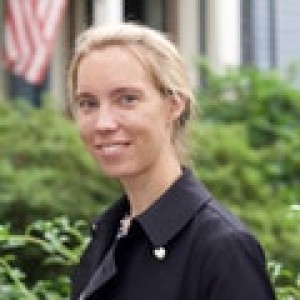
- Karin Öberg is Professor of Astronomy and Director of Undergraduate Studies in the Department of Astronomy at Harvard University. Planetary formation—or stars and stellar evolution—is a focus of her research. She is a member of the Board of Directors of the Society of Catholic Scientists. See her CV here.
- Öberg spoke of her first academic route to astronomy being via chemistry rather than physics. She discovered the field of astrochemistry while an undergraduate at the California Institute of Technology. She earned her PhD in astrophysics at Leiden University in the Netherlands.
- She joined the faculty at the University of Virginia in 2012. One year, later, she received an assistant professorship at the Harvard-Smithsonian Center for Astrophysics, which is located at Harvard.
- Öberg was baptized as a Christian in her youth but then drew away from the faith. She said she never adopted an atheistic, materialistic perspective largely because of two key principles she holds to: moral realism and one’s personal agency as an individual making free decisions.
- During her college years, Christianity remained a living question for her partly because of the friends with whom she associated. Books influenced her deeply: Lord of the Rings, The Screwtape Letters, The Abolition of Man, Mere Christianity, and Orthodoxy. This combination brought her back to Christianity, first in the Anglican Church.
- After joining the faculty at Harvard, she completed a two-year RCIA program at St Paul’s Parish in Harvard Square to join the Catholic Church. One concern she felt in her new Catholic experiences, she said, was that the statements in the Mass did not always seem to line up with personal beliefs articulated by individuals.
- Öberg said she has not personally experienced any bias against her Catholicism at Harvard, and indeed she has felt welcomed in the astronomy community and among other colleagues. She helps to mentor some Catholic and Christian students. Some Catholic colleagues have experienced prejudice, in the biology department, for example. She said one factor is that her research does not touch on any controversial subjects. But she wants to let students know they should not be anxious about living out their Catholic faith because of fear of prejudiced encounters. Overall, being open about one’s faith has a net positive effect on oneself and others, despite occasional crosses one might have to bear.
Aug 19, 2019
Aug 19, 2019
22 min
In this episode we have Jonathan Lunine on the podcast, this time talking to him about his own spiritual journey from Judaism to Catholic Christianity, and from the secular surface of life as a scientist to a deeper life where the beauty of science is one prominent part of a larger whole of human experience. We also get the chance to discuss some of his work in studying the planets during the era when they changed from objects seen through a telescope to worlds we can map and even sample and bring back to our laboratories.
- Jonathan Lunine, a planetary scientist at Cornell University, is a member of the board of the Society of Catholic Scientists. He spoke of the influence of reading Carl Sagan’s The Cosmic Connection and receiving Sagan’s advice for pursuing a career in astronomy.
- Dr. Lunine has been on the scientific teams leading several missions of space exploration, including Cassini and, now, the James Webb Space Telescope.
- He described his early spiritual journey, seeing how science and religion could be intertwined. The journey took him from Jewish family roots to a Methodist church and then to Catholicism. He spoke of being impressed by the connection between the Catholic faith and its Jewish roots.
- Astronomers have been excited to learn of the abundance of planets to be found in our galaxy. As Dr. Lunine pointed out, thanks to initiatives like the New Horizons spacecraft, we have turned our “cosmic backyard” into a place where we can study an enormous variety of geology “and even, potentially, biology.”
- He expressed gratitude for astronomers and others who became role models embracing the compatibility between science and faith. A key figure, about whom he has made presentations, is the Belgian priest Georges LeMaitre, known as the father of the big bang theory.
This was one of our most enjoyable conversations, and we definitely hope to have Dr. Lunine back on the podcast again.
Aug 12, 2019
Aug 12, 2019
28 min
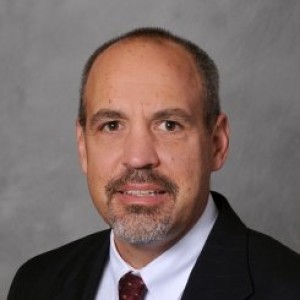
- Dr. Benjamin Rybicki, a member of the Society of Catholic Scientists, is Senior Research Scientist in the Department of Public Health Services at Henry Ford Health System in Detroit. He received his PhD in Epidemiology from the University of Michigan. His research focuses on the epidemiology, demographics and genetics of sarcoidosis, Parkinson’s disease, and prostate cancer.
- There is a strong humanistic theme in biology, and it does entail a deep concern about human beings, but Dr. Rybicki said his experience suggests the humanistic impulse is separated from religious faith in many cases. His particular interest in epidemiology grew partly from an interest in the application of statistics to medicine. At the Henry Ford Hospital, there is a large population of African American patients, among whom there is a heightened risk from prostate cancer and sarcoidosis.
- Berylliosis, which occurs more rarely from beryllium exposure, has a similar genetic susceptibility pattern to sarcoidosis.
- background can increase the risk of, and the behavior of, certain diseases as experienced by people, although it’s not directly related to race. African Americans tend to have a different inflammatory response to pathogens than people of European descent.
- Sarcoidosis is an inflammatory disorder, most commonly in the lungs. It varies in how it progresses and presents itself. The treatment of choice is steroids, and they also have particularly important side effects.
- One’s Catholic faith is an important element in the practice of medicine. An understanding of the human person made in the image of God will influence one’s decisions, including the choice of treatments and the balance of risks and benefits, Dr. Rybicki said. This shows itself, for example, in considering quantity and quality of life and what medicine can provide. We must be mindful of how we’re respecting the dignity of the human person through medical interventions. We must think about how to improve the human condition without getting carried away with ideas of manipulating other factors—extending to intelligence and physical prowess. “I can definitely see that coming down the pike.” Doctors may enhance aspects of life that have nothing to do with the disease condition they’re treating. For example, choosing to change a gene might lower your heart disease but also increase your risk of cancer. We have to be careful. Consider where are we going in the direction of creating a highly medicated society, treating everything with drugs without considering alternatives such as behavioral changes. Tinkering with the human body can have unintended effects. Dr. Rybicki shares this insight with young Catholic doctors: Make your Catholic faith a strong part, a driving force, in the work you do. (Editor’s note: By the way, listeners may be interested in the mission of the Catholic Medical Association.)
- Dr. Rybicki devoted part of his talk to Jerome Lejeune, a pioneer in genetics and in the understanding of Down Syndrome who took his Catholic faith very seriously. Now declared a Servant of God on the pathway toward possible canonized sainthood, Lejeune made sacrifices in his medical career as he maintained his principles about the dignity of every human life while medical science took a different course regarding Down Syndrome.
- The 2019 Society of Catholic Scientists conference was very well done, Dr. Rybicki said. He said he enjoys learning about subjects with which he is not familiar, and conference attendees seemed to share that experience. Videos from the conference are available on You Tube.
Aug 5, 2019
Aug 5, 2019
28 min
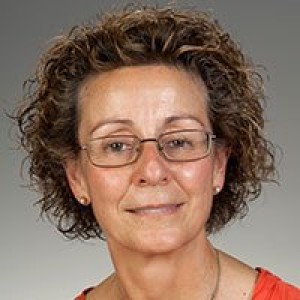
- Sonsoles de Lacalle, a physician and neuroscientist, has recently taken the position of professor and Chair, Health Science, at California State University Channel Islands. She previously served as associate professor of biomedical sciences at Ohio University and Director of the Office of Advanced Studies in Ohio University’s Heritage College of Osteopathic Medicine.
- Dr. De Lacalle, a member of the Society of Catholic Scientists, holds both an MD and a PhD from the University of Navarre in Spain.
- Her research focuses on the field of aging and dementia and the effects of estrogen on brain cells. She sees her pursuit of positions in research and administrative support of research advancement as an extension of her Catholic faith. She sees herself as a “builder” of support systems bearing fruits of well-being for all through the advancement of important research.
- De Lacalle cites the Opus Dei message of building one’s relationship with the Lord and extending Christian values and virtues through one’s everyday professional work.
- She said there are signs in the world’s current culture of a strong, concerted attack against the idea of God and against the idea that we are the mere creatures of a supernatural Creator. Amid the challenges facing believers today, we can draw hope from confidence in the truth and victorious love of the Kingdom of God—we know how the story ends. Through her connection to the study of osteopathic medicine at Ohio State, she saw the value of that field’s commitment to care for the entire person and to respect each person’s inherent dignity.
- Another positive sign she has seen is a trend which may be beginning with New York University’s plan to offer free tuition to its students preparing to be doctors. It is hoped that leaving graduates unencumbered by debts could make them better able to enter certain fields of care where additional medical personnel are especially needed but remuneration is relatively low.
- Among the current research in which de Lacalle wants to spread the word about crucial impacts for human well-being is the study of human physical activity and exercise—their high correlation with brain health through the production of lactic acid, which supports the brain’s executive functions in neurons.