Taking science AND faith seriously.
Episodes
Feb 4, 2019
Feb 4, 2019
38 min
Today we start a two-part series with Daniel Hinshaw, a professor emeritus of surgery at the University of Michigan, who has come to focus on palliative care for the dying. He sees his work as having deep roots in the Christian tradition, and has written on the subject of "kenosis" (the Scriptural concept of "emptying" or "reduction" or "wasting away" that is key to our understanding of the Incarnation and the Passion of Jesus Christ) as a useful concept for understanding our own mortality, at the scale of our individual cells as well as our whole composite being.
He shared some interesting spiritual perspectives with us. As someone who in his mature years moved from the Seventh Day Adventists and sought out the apostolic churches, he now belong to the Orthodox Church. We spent some time discussing the "microcosmos," John Chrysostom's idea that the human being contains all creation in miniature, and how that is oddly true in certain respects: we are each communities of organisms. Our gut microbiome, for example.
Daniel went on to talk some heavy duty biochemical shop. We discussed the oxidizing agents (e.g., hydrogen peroxide) involved in inflammatory ailments. He touched on the fact that some of the worst chemical warfare agents, like sulfur mustard gas, operate in a similar oxidizing mechanism, triggering apoptosis, and discussed some of his work on finding remedies for these agents, as well as how similar they are to the earliest generation of chemotherapy agents.
We shifted back to the question of faith, and discussed how both Daniel and his wife confronted suffering in their work (his wife as a psychiatrist treating AIDS patients in particular) and this was a core part of their journey. Daniel pointed out the provocative fact that we really seem to be programmed to age and die, and that the only exceptions to this... are cancer cells.
Another moral point we discover in modern biology has to do with epigenetics. As human beings, we can abuse our bodies to the point that we leave effects on our germ cells that can carry on the "sins of the father" to future generations.
Jan 28, 2019
Jan 28, 2019
27 min
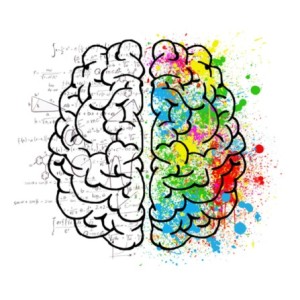
In this episode, we expand on our introduction to the brain by discussing some theories - ranging from well-documented to rather speculative - about the specific structures of the brain that are active (or less active) in situations ranging from autism to depression, stress, and trauma.
At the end we spend a few minutes on a preliminary critique of the materialist reductionary attitude ("interpretation" is too grandiose a word for it) toward brain science by many of its practitioners and reporters. Free will, for example, is not an illusion just because the physical part of the brain where it happens can be injured and we can be deprived of it... but much more on such neurophilosophical issues as the year progresses.
Jan 21, 2019
Jan 21, 2019
32 min
In this episode, we lay out the basic groundwork for future discussions of the human brain.
The brain we humans have apparently evolved in three stages. This can't help but be a tremendous simplification, but it's a commonly encountered statement and seems to have considerable explanatory power.
The lowest part of the brain, the brain stem (the medulla, etc.) and the cerebellum, control unconscious processes, most of which we cannot take into conscious control even if we want to. Often this is called the "lizard" or "reptile brain."
A series of little suborgans, the thalamus, hypothalamus, amygdalae (a - myg ' - da - la, the good Latin pronunciation, for the singular apparently; and my Webster's unabridged also informs me that it just means "almond shaped thing"), putamen (that habit-storing part I could not remember during the episode), and a few other parts form the limbic system, that communicates between the senses and the body, and that serves critical functions for things like emotion and memory that we share with mammals.
The upper part of the brain, the big part in human brains, is the cerebrum. Its regions are referred to as cortex / cortices or lobes. We have large volumes of the brain dedicated to visual and auditory processing, motor skills, and the whole front of the brain is where the neural work of our most human capabilities occurs: judgment, reasoning, wondering, creativity, consciousness.
The following two books informed the discussion today:
The Body Keeps the Score by Bessel van der Kolk
Mapping the Mind by Rita Carter
I cannot recommend The Body Keeps the Score highly enough. It starts out as a discussion of PTSD, but it grows organically into a discussion of problems that all children, and therefore all of us, are liable to have, and ways that are being discovered to bring both brain and body to peace.
On the other hand, Mapping the Mind is only intermittently good. The first hundred pages I found rough sledding, with little sense the author understood the facts being hauled out and stacked up. It got better. The last few chapters betray the common, poorly thought through materialist reductionism common in the field, no surprise, but the content of the final 200+ pages is mostly good. Autism, depression, and addiction come up, although the stock in trade is discussion people with bizarre, tragic, but fascinatingly specific brain damage and what those episodes suggest about how all the different mental aspects of being human are spread about the brain.
Jan 14, 2019
Jan 14, 2019
54 min
What sense can we make of the ancient and medieval idea that "the soul is the form of the body" in the light of contemporary neuroscience and psychology?
Highlight this idea's differences from Platonic and Cartesian dualism.
History of psychology as a discipline. Psychology has not evolved (a) master paradigm(s) that compel the bulk of the field to adhere to them the way that plate tectonics did for geology, Newtonian classical physics and then quantum and relativity did for physics, etc.
Peace of Soul (Fulton Sheen) remark that psychology has been furtively recycling Christian ideas and passing them off as new for a long time
Examining the convergence points of the advice for living from the Bible and Tradition, modern psychology, and the contemporary self-help / New Age-y movement that continues to spread and adapt through large sectors of modern culture.
Self-esteem, humility...
Confidence, faith, negative tapes...
Twelve Step spirituality (Richard Rohr and the intense overlap between 12 Step and Catholic spirituality)
Even many of us who are explicitly Christian have internalized a kind of Lutheran / Jansenist belief that we are so terrible that, in essence, God made a mistake in going to all this effort to save us, because we're not worth it. This is one of a number of areas in contemporary Catholic and Christian culture where we have let our understanding of Scripture and Tradition get very warped and imbalanced.
Issues surrounding how the Christian and scientific understanding of universal history could fit together.
What will "the end of the world" look like? Will it be the end of the whole universe or not? Will there be human colonies on other planets, orbiting other stars? How would the Apocalypse play out then?
You can find That's So Second Millennium at all of these places:
tssm.podbean.com
paggeology.net/blog
@infamousDrG on Twitter
That's So Second Millennium page on Facebook
giesting -at- alumni.nd.edu is Paul's email address
Please be in touch with your feedback, ideas for new episodes, and conversation of any kind!
Jan 7, 2019
Jan 7, 2019
40 min
Themes we'd like to grapple with in the Year of Our Lord, 2019, and beyond:
Last year was largely about the intellectual challenge leveled by many against religion, and we will continue talking about that as the podcast moves forward.
Paul's mission this year to work through Road to Reality
This year we also want to broaden the scope to include places where religion and faith converge, which means we're going to discuss psychology.
Looking forward to the SCS conference topic for this coming year: what it is, and has been, to be human. Neuroscience and what it implies for anthropology, and where it meets Catholic Christian anthropology coming the other way.
What is consciousness, anyway? What parts of the brain seem to be involved, and what do they do?
What is free will, anyway? Where are those breakpoints where the soul would have to affect the body in order for that to even work?
Crisis points in the way people in the post-Christian West approach the world.
Center for Ethics & Culture annual conference in 2018: Wilfred McClay & John Waters
"we care about everything, but without God... we have responsibility for everything, but we know that we are flawed and unable to provide solutions"
Post-Christian in this context includes both people who have explicitly renounced the Christian faith of the West and those who have a Christian identity in their back pocket somewhere but in reality are not relying on Jesus Christ or his teachings to guide their lives in any conscious way.
Christianity is a demanding religion. If you suck away all the grace and help it promises, but leave some of its demands for social justice or purity of intention, you have a recipe for constant internal condemnation.
Link:
Wilfred McClay (University of Oklahoma) on “Guilt in the Immanent Frame”, and John Waters on “The Importance of Not Being God: A Higher Power Is Indispensable for Human Beings and Human Societies”
No, not THAT John Waters.
Dec 31, 2018
Dec 31, 2018
1 hr 8 min
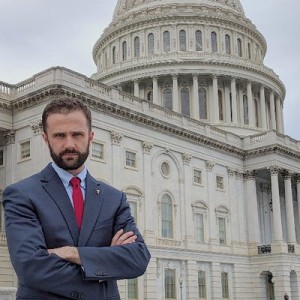
I had the chance to have an unofficial interview with Kirby Runyon. (Planetary science is a very publicity-heavy field, and planetary scientists often labor under certain constraints regarding their contact with the media. We avoided mentioning his institutional affiliation to emphasize the point that this interview in no way characterizes any official position by his institution. You can find out where he works, and get access to some of his work, via web search if you are curious, and there's a clue around 13:00 as well.)
We opened the interview with a discussion of Kirby's research on surface processes on planets. He works on data returned from the Moon, Mars, and Saturn's moon Titan to evaluate how winds, asteroid impacts, and other forces shape the surfaces of those bodies.
Read the rest of this entry »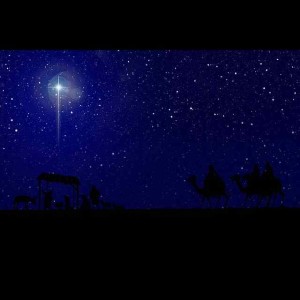
Dec 24, 2018
Dec 24, 2018
52 min
In this episode we try to give a little workshop on thinking for yourself about a thorny passage in the Bible, specifically what we are to make of this star that supposedly influenced the Magi (wizards? astrologers?) from "the east" to come to Jerusalem looking for Jesus.
Read the rest of this entry »
Dec 17, 2018
Dec 17, 2018
32 min
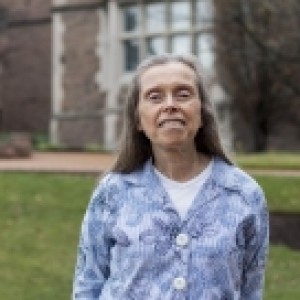
0:00 Experience as a Christian scientist
1:00 The billion year contact; awe
2:00 Awe and the vast scale of Earth science
3:00 Discoveries never shake faith
4:00 Evolution, randomness, the shortage of provable things
6:00 The bureaucratic mindset: certainty and judgment
7:00 Yucca Mountain, studtite, and uranyl peroxides (Peter Burns, Karrie-Ann Hughes)
8:00 Uranyl chemistry
9:00 Guy Consolmagno's thought experiment on planetary atmospheres
10:00 Uranyl peroxide buckyballs...
11:00 NOT in the initial fate and transport model for Yucca Mountain
12:00 Real life is lack of certainty
13:00 Where we'd put uranium if we had to...
14:00 Hanford, Washington and uranium migration
15:00 Phosphates as immobilizers
16:00 Humans and squirrels: digging stuff up to bury it again
17:00 Kirby Runyon
18:00 Difficult conversations
20:00 The Bible
21:00 Cyclic nature of human history, scriptural history
22:00 The second millennium history of reaction, after reaction, after reaction against hypocrisy
23:00 Secularism and the irreligious right
24:00 Progressive movement as a para-Christian critique of society
26:00 Modern psychology and spirituality:
Fulton Sheen's image of the psychologist pulling Christian truths out of the garbage can
and passing them off as discoveries
29:00 The need for God
30:00 Companions on the way
31:00 Providence
Dec 10, 2018
Dec 10, 2018
27 min
3:00 Jill's career
5:00 Finding companionship as Christian scientists (not Christian Scientists...that's different...)
7:00 "Spiritual beings having a human experience"
8:00 Bioapatite; clearing up "loose ends" making a 20 year career arc
9:00 Apatite and phosphate: environment
13:00 Flint, Michigan: lead and protective minerals
14:00 Raman spectroscopy
16:00 Raman on the Mars 2020 rover; Alian Wang
17:00 Laser pointers, cat videos [the brave new world we live in]
18:00 The physics of Raman
19:00 Why lasers and Raman went hand in hand
20:00 Rayleigh vs. Raman scattering
21:00 Raman spectra
22:00 Raman: a (usually) nondestructive technique
23:00 The lecture example and the ease of sample prep for Raman
25:00 Raman peak heights and thermodynamics
26:00 Fingerprinting vs. understanding
Dec 5, 2018
Dec 5, 2018
4 min