Taking science AND faith seriously.
Episodes
Jul 23, 2018
Jul 23, 2018
12 min
It's a short one this week. We discuss the talk at the Society of Catholic Scientists Conference by Aaron Schurger with the delightfully provocative title "Fifty Years Without Free Will." (Those of you who are similiarly obsessive about grammar will appreciate my deep feeling of conflict about capitalizing the preposition "without"...one is not supposed to capitalize prepositions, yet it looks awful to have a seven letter word not capitalized. It's not capitalized in my notes, but it was in the program.)
Notes I took during the talk, which for this podcast pretty closely follows the drift of our conversation:
Distinction of the "neural decision to move"
Readiness potential with ~1 sec onset time
Libet et al 1983 Brain 106:623-42
asked subjects to report when they decided to move
happened ~3/4 sec after readiness potential, only ~1/4 sec before the movement
Taken by many as proof that "there is no free will"
Alternative interpretation: the "readiness potential" is random drift of neuron voltages
under the weak imperative to move
Need to pay careful attention to experiment setup & analysis of data [Paul's comment today: *always*]
Problems with only analyzing data time-locked to movement and extracted
Jul 16, 2018
Jul 16, 2018
18 min
Dr. Scarani opened the talk by noting a paper he placed on arxiv.org about Aquinas and the sense that the universe would not be perfect without randomness.
He moved on to discuss randomness in two senses: Process Randomness, which implies that there is an observer unable to predict the output of the process; and Product Randomness, the lack of structure of a product, which turns out to equate with the need for a very long algorithm to replicate the product. Products are tested for randomness by a battery of statistical tests. He gave an equation embodying a mathematical definition of [product] randomness. Not being an information theorist, I had not seen it before.
He went on to note the difference between the randomness of classical physics, which is always about a lack of complete information about a system. If one had that information, the system under the classical assumption would be perfectly defined, and as we have noted a number of times, Einstein among others desperately wanted to get back to that deterministic paradigm. "The Old One doesn't throw dice."
The core of the talk was what Scarani called a "high school level" presentation of Bell's theorem. I would like to meet the high school student who could follow it at the speed at which he gave the talk, but probably could have unpacked it given a couple of hours to do so even at that age. Bell's theorem is one of those cunning little mathematical gems that seems to prove the unprovable, namely, to make a prediction about something going on in a process one by definition cannot see into. Bell sets up a statistic that, if there are hidden rules governing physics below the scale at which the uncertainty principle lets us see, must nevertheless in real experiments end up being less than 2. Since the 1980s a series of ever more careful experiments have been done, and the answers in the papers Scarani reviewed had answers between 2.4 and 2.7; the answer is never below 2. According to Bell's theorem, this means that there is a really random process going on down there, and not just random products.
At the end, as we discuss in the audio, Scarani ran down the list of remaining possibilities for understanding the quantum foundations of the universe:
- There is real randomness.
- "Superdeterminism." This depends on breaking an assumption of the Bell theorem, which is that the quantum process is being fed input that itself is not really random from the perspective of that process, which would seem to imply some sort of physics puppet master controlling the experimenter.
- The many worlds hypothesis, again something we have mentioned a number of times. I am still not buying that stock.
- The only allowable sort of hidden variables (the name Bohm is attached to the most commonly discussed of these) would require particles communicating with each other at infinite speed, "deliberately" trying to wreck the experiment, and with the interaction hidden in a way workers in the field have called "conspiratorially hidden." I.e., we would be living in a universe run by a sort of Cartesian evil deity.
On that theme, note that I blundered off into talking in a sort of Cartesian dualist fashion about the relationship between soul and body there after the 14 or 15 minute mark.
Jul 9, 2018
Jul 9, 2018
18 min
In today's episode we discuss Stephen Barr's talk at the SCS conference on June 9. His topic was the observer question in quantum mechanics. The observer problem is closely tied to the issue of probability and wavefunctions. We spend quite a while discussing what this problem is and how the question arises in the context of experiments like the famous two-slit experiment. The example of "Schrodinger's Cat" is an attempt to make this problem more understandable to the non-quantum mechanic. The cat is in some uncertain state, neither alive nor dead, until the observer opens the box and "collapses the wavefunction" to either a live cat or a dead one. In a two-slit experiment, a particle exists in some distribution of possible positions until an observer collapses the wavefunction and "forces" it to one tight range of locations (and for that matter momenta...).
This is very weird. Barr cited a long list of quantum theorists (von Neumann, London, Bauer, Wigner, Peierls, and others) who considered the problem and whether mind as such is crucial to whatever it is that does the measuring and observing to collapse quantum systems. Wavefunctions, with their consequent probability distributions, evolve according to Schrodinger's [or Dirac's?...a question I've had in the back of my mind many times...] equation with no internal mechanism to cause this collapse. Clearly two very unlike things interact to form quantum mechanics as we know it, as von Neumann stated explicitly (calling the observer / collapse phenomenon "process 1" and the wavefunction evolution "process 2").
It is clear that we can shift our mathematical formalism to incorporate any physical measurment device into the "system" and thus recognize it to be in the realm of wavefunction behavior. There is the "Wigner's friend" thought problem where even a human observer of an experimental setup can be placed in the "box" from the point of view of another human observer.
When we consider the observer problem from the point of view of a descriptive science (geology, astronomy, zoology, etc.) there is the immediate and rather alarming philosophical question: What was happening to, say, this star or tectonic plate or ancestral population of invertebrates before there was an observer to collapse the wavefunctions? Someone raised this question with Dr. Barr in the question and answer session after the talk. There is a phenomenon called "decoherence" (warning: that link is informative in places but far from the clearest read) which occurs for systems that are very open, interacting with their surroundings. Broadly speaking, the observable in question can trade uncertainty with its surrounding and settles down into a tighter range of possible states, simulating to some extent the effect of an observer collapsing the wavefunction. However, the two phenomena are not the same.
Jul 2, 2018
Jul 2, 2018
28 min
In this episode we begin a series of recaps and discussions of the issues brought up by individual lecturers at the Society of Catholic Scientists conference on June 9 and 10. We start with Ed Feser's keynote, "The Immateriality of the Mind."
Feser's objective was to highlight how our ability to be rational, and in particular for our thoughts to mean something unambiguous - even in the face of our inability to express ourselves in a completely unambiguous way in our spoken or written words - makes it difficult to maintain a purely materialist / physicalist view of human minds and therefore of the universe they inhabit.
At the outset he noted that rationality tends to occupy less attention in philosophy of mind and matter than two other properties, consciousness and intentionality, which seem widely taken as more difficult to explain by our contemporaries. For ancient and medieval philosophers, however, rationality was probably the clearest indication that the human mind is not some sort of solely physical mechanism.
Feser presents an argument via James Ross (Thought and the World) to try to bring this older consensus into the mainstream. It can be presented thus:
- Formal thought processes can have an exact, unambiguous content.
- Material signs and processes never have unambiguous content.
- Formal thought processes must employ an element not dependent on materials signs and processes.
We discuss Feser's points and a few of our own in favor of the two premises: our inability to be sure of the content of arithmetical symbols used outside our own range of experience, the ambiguity of translating ancient languages like Linear A, and the absurdity of believing I can't ultimately know what I'm thinking about.
Jun 25, 2018
Jun 25, 2018
37 min
Intro
Overview of the conference - schedule
Talks
Edward Feser & connections to Bishop Barron
Theme: Human Mind & Physicalism
Development of the problem and the amazing change in intellectual climate since the 19th century
Laplace and absolute determinism - 19th century consensus
Quantum mechanics demolished this intellectual basis for determinism, although it is clung to fiercely down to the present day, including the profoundly horrifying "many worlds" hypothesis
Bell inequality and the talk by Valerio Scarani about the closing of the loopholes that would allow a "hidden variables" interpretation of quantum mechanics (which would also save determinism, in a much saner way than the "many worlds" hypothesis)
Materialism and "spiritualism" (if you will) are on an equal logical footing, even if cultural issues continue to propel many scientists and intellectual citizens of the contemporary world away from belief in extramaterial beings
Society of Catholic Scientists as a place of refuge from this social pressure toward materialism
The gap between spiritual and material in ancient thought versus modern thought
The problem of qualia, choice, and consciousness and the lack of an actual materialist model for these, as opposed to evasive and reductionist language
On the other hand, the reality of a physical manifestation of all (or nearly all) mental phenomena, the dignity of matter in this detailed participation, and the absolute need for human souls to have bodies in order to be complete human beings (in contrast to Manichean, Platonic, or Cartesian dualism)
The scholastic notion of the human soul as form of the body
The Aristotelian soul / souls
Are vegetative (and animal) souls the forms of those bodies...are those essentially their genetic structure?
This ties back to our existing discussions about "hylomorphism for the third millennium" (so to speak)
The need for a new metaphysics and philosophy in general to rise up and deal with the strange new world that modern science has brought to our attention.
The scholastics, Aquinas of course being the one we remember, had a philosophy that was capable of being constructive...Chesterton's comment that modern philosophers ask us to accept some crazy thing in order to found their system, while Aquinas' starting point was common sense.
The difficulty of thinking and doing interdisciplinary scholarship in the modern world, despite decades of recognizing that we need to do it, due to the volume of human knowledge today and also the whole economic and sociological apparatus that depends on measuring scholars' output somehow...which is tremendously easier for single-focus scholars to maximize.
There is a unique joy that we can have as scientists of faith...both in our subject matter and in our fellowship with each other.
Our next few episodes will look at the subject matter of specific talks at the conference.
Jun 18, 2018
Jun 18, 2018
31 min
Not to be confused with the League of Extraordinary Gentlemen, although one would understand the mistake.
Bill interviews Paul about his experience and observations at the Society of Catholic Scientists conference that took place June 8-10 at the campus of Catholic University of America in Washington, D.C.
The SCS is a very young organization. Its first president is Stephen Barr, a physicist at the University of Delaware. Its first conference was in April 2017 in Chicago. The theme of the 2018 conference was "The Human Mind and Physicalism"--physicalism being a somewhat more precisely defined term than its synonym, materialism. (Believe it or not, some folks at the meeting thought those two elements in the title were probably incompatible.)
Paul discusses the meeting and the variety of scientists he saw and met there, including Barr, Juan Martin Maldacena (a prominent string theorist), Aaron Schurger (a neuroscientist), and more. Bill and Paul do a little digging and comment on motivations for the group, including the desire for fellowship (like the existing group, Catholic Association of Scientists and Engineers) but also to band together against the folly of the existing culture and its tired, hugely outdated idea that science and faith (certainly the Catholic faith) are logically incompatible. GK Chesterton was quite right when he commented that the quarrel between science and religion was properly left to prematurely arrogant scientists and sola scriptura fundamentalists back in the NINETEENTH century. It's the twenty-first, now, and we should get ourselves to the business of putting this to bed.
Paul elaborates on this final fact at some length, discussing the parallels between the current day and the scholastic synthesis of the thirteenth century. Odd, is it not, that in the broad sweep of history, Aristotle and his universe existing indefinitely backward in time lost out to the stories of a bunch of Hebrew peasants who thought the Prime Mover had actually created the world at a specific point...

Jun 11, 2018
Jun 11, 2018
29 min
We start off unpacking the climate change example further and provide some additional context from political science and seismology. The point is to use climate change as an object lesson in how to break down a big issue at least a little bit, which is what a good intellectual citizen needs to do.
That still leaves us with a picture of intellectual citizenship as a really, frighteningly large responsibility for all of us to try to bear. We spend some time discussing the other side of the issue: we either live in a universe with no loving Creator or moral principle of compassion, in which case it hardly matters what we do or don't do, or else we live in a universe that does have such a Principle, in which case our best effort is good enough, because that Principle has things well in hand no matter what we do. If we let that sense of security sink in, that frees us to start with whatever issue attracts our attention first and go from there. We can take almost any example and infer some principles from that, which can be taken to other problems in the world.
Another point inspired, at least indirectly, by The Death of Expertise is the thought that all of us...certainly all of us who have an interest in the subject matter of this podcast...can, should, and probably already have become experts in something, so that we have offer something back to the world. That very expertise also gives us a lot of grist for considering the work of other experts and coming to some sort of judgment as to whether they are fulfilling their obligations and are more or less trustworthy.
Paul then asks Bill, in his personal expertise in journalism, for some pointers on how to judge media. Bill promises to discuss it more in the future, but takes some time to lament the decline many of us perceive in journalists' willingness to report as opposed to opine and engage in punditry.
Bill asks Paul to close out the podcast with a meditation on how model-based thinking could apply to religion as well as science. One prominent way is to consider how we use the examples of the lives of figures in Scripture and the saints to infer models of how human life can go. We don't get very far if we try to replicate another person's life exactly, and yet there are principles we can abstract from the examples of the saints that can help us on our way.
Apparently, we have not even touched on the issue that inspired Bill's original question about "intellectual citizenship." Whether we do that next episode remains to be seen.

Jun 4, 2018
Jun 4, 2018
31 min
Bill and Paul dive into a very simple question posed by Bill over email: "Please describe more what is intellectual citizenship?" That of course opens up a question that lurks behind every issue we discuss, and any philosophical or religious question touches upon, which is what we owe the universe, its Creator if it has one, and each other. We can't learn everything about everything, and we must make choices what to spend our time on.
In the political system we inhabit, in the U.S. and other contemporary representative democracies, we choose whom to trust to make decisions for us. There is a tendency to think about our choices in voting as a process of simply matching up policy preferences, but that leaves out of consideration the very important human question of which candidate will actually act on his or her stated policy preferences and do so effectively.
In our awareness of the broader world, when we give our allegiance to science, it's good to have an idea to what sort of thing we are pledging ourselves. Different sciences are at different stages of development and are more or less ripe for further paradigm shifts. Those paradigm shifts may come more or less "off in the distance," where they may or may not affect how we solve practical problems. The paradigm shifts we've discussed in physics didn't change how civil engineers made their calculations, but the plate tectonics revolution in the 1960s did have practical ramifications for economic geology and hazards assessment, just to name two things. The human sciences of economics, sociology, and psychology are good examples of sciences that are ripe for paradigm shifts. Indeed, currently, they are in the really unstable situation of having multiple competing paradigms.
When we apply science to a practical question, like the issue of climate change, being a good intellectual citizen means gaining at least some awareness of the different parts of the problem and the degree to which our experts can express certainty on each issue. Climate change requires at least three big components. First, we need the basic thermodynamics of how air and water respond to heat, how they move and mix. On that abstract level of physical laws, we have great certainty. Second, we need detailed data on the temperatures, wind speeds, air composition, etc. all across the planet. On that level, we have a great deal of data, but not as much as we could conceivably want. Third, we need models that run on as dense as possible a cluster of node points, which is to say models that divide up the atmosphere, land, and oceans into the largest number of little boxes possible; and likewise, models that take into account as much of the physics as possible, and not just a few of the elements. This is the really hard part, even with the computing resources we now have.
Bill wraps up the episode by noting how daunting we have made the question of intellectual citizenship and also how important the question of models is whenever we try to apply science...and maybe any body of intellectual knowledge...to our problems. We will take these questions as our point of departure for the next episode.
May 28, 2018
May 28, 2018
36 min
Bill’s introductory question: Would there be a quick curriculum in basic philosophical principles, including the philosophy of science, that could discourage people from assuming that science and religion are at incompatibly opposite ends of the spectrum of “how to think about things”?
We discuss the difficulty of canning a “curriculum” or “program” to address anything, let alone a problem as nuanced as this is, before plunging ahead and taking our chances.
Paul argues that there are actually significant parallels between the religious, and specifically Christian, concepts of “mystery” and “dogma” and inescapable aspects of thinking about and doing science.
A mystery is an issue within a system of religious doctrines where it is confidently pronounced that human debate and philosophizing will never exhaust the issue and solve it completely. That is very different than saying a mystery is something to encounter and then stop thinking. It’s the opposite. It’s a promise that continued thinking and contemplation will continue, world without end.
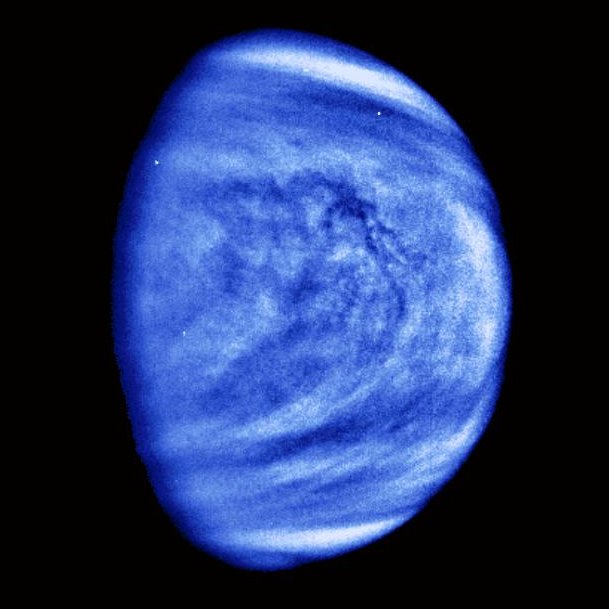
Even the concept of dogma has analogues, especially if you broaden your horizon of scientific thinking enough to take in the observational or descriptive sciences like geology, zoology, and paleontology. In these sciences, we try to understand phenomena that we don’t have the power to replicate. We can’t run the experiment “Venus” over again, changing the parameters until we understand for certain why it came out with this thick carbon dioxide atmosphere and high surface temperature as opposed to being more like Earth or Mars or anything else. We can do experiments that help us interpret the observations we make, but we have to accept the testimony of the geologic, paleontologic, or astronomic record as it has been presented to us.
Christian dogmas boil down to testimony. We can’t run the experiments Mary or Jesus of Nazareth over again. A Catholic Christian accepts testimony that has been handed down, and if he is a thinker of any kind, he works that into his worldview.
Again, key points in this discussion we owe to Stephen Barr’s Modern Physics and Ancient Faith.
Paul’s profile on Goodreads: https://www.goodreads.com/user/show/4658045-paul.

May 21, 2018
May 21, 2018
30 min
Resuming the cliffhanger: the breakdown of classical physics
Shift from the classical to the quantum paradigm
Light is in individual packets of energy whose size is keyed to the frequency of the light.
This is the solution to the blackbody problem: the mathematics of emission of quanta of light energy produces the well-behaved curve with a peak at a given color that we see for hot objects, whether the Sun, iron in a forge, or a light bulb filament
It is also the solution to the photoelectric effect: light of high enough frequency is needed for the individual light quanta to add enough energy to eject electrons. Apparently the atoms can only interact with these photon quanta one at a time; you cannot add multiple red photons to eject an electron, but rather you need a single blue one.
The spectra of the Sun (with absorption lines) and energized gases (like neon or sodium lamps, with emission lines) turned out to be compatible with this quantum theory as well. The structure of the atom itself must be quantized, and electrons must live in well-defined energy shells; when they move from one to another, they emit or absorb photons of a well-defined frequency. Quantum theory began to solve problems chemists did not necessarily even realize they had about, e.g., why chemical bonds tend toward exchanging or sharing electrons so as to reach the number 8 in the outer shell.
Still, even with all this evidence, as the saying went, “Science progresses funeral by funeral.” Many older scientists stayed in the old paradigm to the end of their careers, whether as recalcitrants who refused to even believe in the new paradigm, or perhaps more often as castaways adrift in the new sea, clinging to the old research programs they were comfortable with and hoping, implicitly, that their work would add up to something that would remain untouched in the new world order their students would inhabit.
Religion: why do people believe? Is it reasonable or just arbitrary?
Picture a craftsman in Corinth c. 50 AD/CE.
This guy named Paul shows up in the stall next to you and starts making tents. While he’s not making tents, he’s talking about this Jesus guy with these crazy claims that he’s been killed and then “rose from the dead,” whatever that means.
You don’t think too much of it until the day you watch him grab Alexander the cripple by the hand and he suddenly starts walking! You’ve seen this guy for 15 years sitting there begging…
Yet for all the miracles, do you change your beliefs?
It helps that Paul is talking about this Jesus as the Son of, not some Greek god few of you really believe in any more, but some transcendent God that sounds a lot more like Plato’s Form of the Good or Aristotle’s Prime Mover.
It helps a lot more that you see changes in yourself as you listen to Paul: the things you’ve done and the things you’ve suffered make more sense. You want the forgiveness and the joy that Paul says this Jesus brings.
All of which is to say, in both scientific paradigm shifts and religious conversions, it takes a convergence of falsified old predictions, verified new predictions, and the ability to fit things that still work from the old paradigm into the new paradigm for the paradigm shift to take place.