
Taking science AND faith seriously.
Episodes
May 17, 2018
May 17, 2018
7 min
Bill prods Paul into discussing how the mindset of the saying, "Science progresses, funeral by funeral" and its attitude of constantly discarding the past in favor of the new has taken over the academy. It isn't the right mindset for, say, literature, or even for undergraduate teaching, but because of the prestige (and funding) accorded to science research in the modern university, other disciplines have begun to imitate it. Top researchers often do not make the best teachers, either...
May 14, 2018
May 14, 2018
30 min
Science’s origins in “natural philosophy”
Tension between Aristo-Thomist metaphysics, post-Cartesian idealism and Kantian/Humian criticism and etc., and science
Philosophy of science: what is it?
My own introduction: Popper and falsification key, Kuhn and the sociology of science revolutions / paradigm shifts
Tendency to exaggerate contrasts and play down common elements between them
Quantum foundations, classic experiments leading to quantum physics, wave-particle, uncertainty principle – falsifying classical physics, bringing about a new paradigm
Existing paradigms of classical physics & chemistry:
Light is definitely a wave phenomenon, period. It displays diffraction / interference effects that only make sense for waves, not little shooting corpuscules a la Newton
The electrons (protons and neutrons not being discovered yet) are particles with a given mass, location, charge, velocity.
Classical failures of light
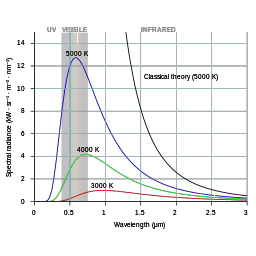
Why do hot objects give off light, or rather, how? Classical physics applied to this problem winds up with a completely unworkable “ultraviolet catastrophe” where all objects at all temperatures have a frequency – intensity curve that shoots off to infinity.
Why do photoelectric materials only shed electrons once light of high enough frequency hits it? That makes no sense; it should be the brightness / intensity of the light that matters, right?

May 7, 2018
May 7, 2018
35 min
We follow up on last episode's promise to talk a little more about evolution. Evolution literally comes from the Latin "to turn outward" and had a huge meaning cloud. One classic image it might evoke is that of a flower bud opening and the petals turning outward to reveal the whole flower.
This is not an alien concept to religion, and certainly not to Christianity. The moment you take the Christian scriptures as a set of texts written by real people scattered across over a millennium of history, you have to accept that God's revelation has unfolded over time. Evolution has mileposts, and the time before the scriptures began to be written, the time during which they were written, and the time afterward are all marked off by mileposts just as the time before and after, say, multicellular life first evolved is different. There is no going back.
Paul takes the excuse to geek out a bit about how minerals evolve as well. The fairly averaged, semi-homogenous solar nebula that gave birth to the Sun and planets condensed into particles, a few of which collected into the rocky planets like Earth and Mars. From their original fairly undifferentiated state, these planets evolved by segregating out a core full of reduced metallic iron, while the surface was irradiated by the Sun and oxidized. On Earth the process led to even more evolution of minerals as its watery surface gave birth to life, and that life eventually started pumping this ludicrously caustic gas we call "oxygen" into the atmosphere. Of the many thousands of minerals known to science, a very large proportion of them have come into existence only since that time as minerals have "evolved" to meet the "demands" of Earth's unique atmospheric chemistry.
Getting back to religion...if evolution is a concept contained within Christianity, why are other instances of it now claimed to be alternatives to it? One major influence is the trend of the latter half of the second millennium to rebel against the hypocritcal leadership of theoretically Christian kings and prelates who luxuriated in wealth and power. Once there were Protestant churches, these were eventually rebelled against as well, and now the secular institutions and culture are engaged in attacking themselves. The habit of criticism has certainly allowed us to make astounding advances in science--20th century physics could not have emerged without it. Yet the cry "totally revolutionary new way of..." is now a hackneyed piece of salesmanship all across our culture.
Next time we plan to start discussing some of the concepts of philosophy of science, including the role of criticism and falsification. Paul wants to ask whether there's really such a hard line between religion and science as is commonly supposed, both by religion's enemies and its adherents...

May 1, 2018
May 1, 2018
42 min
Bill asks about whether evolution and the randomness it seems to imply are problematic for faith. Paul discusses the difference between evolution in biology (with a succession of species) and physics (where new laws layer on top of old laws without destroying them). We talk about the mindsets of physicists and biologists, and tangle more with that problematic phrase "shades of gray." Bill confronts Paul with Einstein's comment that "God does not play dice," and Paul responds with commentary mostly from Harvey Brown and Steven Barr about the alternative interpretations of quantum theory: hidden variables and determinism, or the Copenhagen sense that the probabilistic interpretation of quantum events is physically, ontologically, metaphysically real, and the room in the Copenhagen interpretation for interactions between the spiritual (souls, God) and the physical (body, miracles).

Apr 23, 2018
Apr 23, 2018
40 min
Paul elaborates on how the hylomorphic principle, if anything, fits quantum physics better than it fit the world the medievals knew. Bill asks whether the worldview of people of faith is too rigid, while that of the secular masses is too loose. Paul wonders what "shades of gray" really means, and points out that even though the materialist worldview has become harder and more dogmatic, 20th century physics really exploded its scientific foundation. This epsiode brought to you by Arthur Compton's Freedom of Man and Stephen Barr's Modern Physics and Ancient Faith.
Apr 16, 2018
Apr 16, 2018
36 min
Bill and Paul talk about whether the old convention of hylomorphism at least initially seems to describe the world of quantum physics, the medieval dispute over plurality of forms, and the degree to which science and philosophy became delinked in the late second millennium.

Apr 9, 2018
Apr 9, 2018
29 min
What is metaphysics, and is it any more relevant to modern life than Casper the Friendly Ghost? Paul discusses how the ancient metaphysical framework of matter and form (hylomorphism) involves some tricky terms for us moderns but can still make sense of some examples of scientific issues from mineralogy and zoology. Next week we see if it can cope with undergrad quantum physics...
Apr 2, 2018
Apr 2, 2018
23 min
Why pick either science or religion when you can have both? We open the discussion and touch on how fields as disparate as cosmology, neuroscience, and psychology interweave with faith in fascinating ways.

Apr 2, 2018
Apr 2, 2018
9 min
We recorded this discussion as we were making Episode 1 and decided it needed to be a separate bonus episode.
Mar 27, 2018
Mar 27, 2018
8 min
Paul (Giesting!) describes his intellectual and spiritual journey and why he's part of That's So Second Millennium.