Taking science AND faith seriously.
Episodes

Oct 1, 2018
Oct 1, 2018
34 min
In this episode Paul lays out in a more systematic way the methods used in geology since the late 18th century to erect the detailed stratigraphic history of the Earth. Lithostratigraphy, which works via Steno's Laws, can be used on all the rocks in any outcrop. Its shortcoming is that it cannot be extended beyond a regional scale, at best--say, the state of Wyoming, or Wales and Corwall, etc. Biostratigraphy, the use of fossils, which includes the selection of specially suitable index fossils, allows correlation of strata across continental, oceanic, and worldwide scales. However, not every rock--not even every sedimentary rock--is a good home for fossils. It is only by the use of both methods in tandem that a complete relative geologic timescale has been assembled and erected.
You will note that in passing I mentioned that the idea of extinct organisms was difficult for European scholars, specifically, in the 17th century to accept, and then I go on to give you a tell by speaking of Renaissance "gurus"...of course, I mean to contrast European thought with Indian thought, in which the idea of extinct organisms is not so hard to fit in to an idea of long, cyclical histories of periodic destruction and remaking of the Earth and universe.
Two specific points: One, the word evolution contains a lot of conceptual components. What we are discussing in this episode, what is almost beyond realistic controversy at this point, is what I would term "succession of species." Matching sequences of fossils, in their relative age relationships as indicated by Steno's laws, recur in innumerable outcrops across the Earth. (I note in passing that an all-knowing Creator building this out of nothing in instantaneous creation must assuredly have known that this would deceive human beings eventually into thinking that there was a succession, and then you have to deal with the intellectual baggage of God deliberately lying to us.) That is different than the mechanism by which this succession of species was made to occur: inheritance, survival of the fit and extinction of others as environment and competition varied with time, mutations, viral transport of DNA, and whatever else actually caused this succession of species. That is less clear.
Two, the early workers in stratigraphy (especially the British ones) by and large wanted the Biblical narrative, and even the Biblical minimalist narrative to work out. The evidence forced them out of this interpretation. To reiterate the point from last episode, there was never a conspiracy to submerge the Bible story of creation and Noah's flood: the cycle of observation, reflection, and criticism of ideas killed theories depending on excessively broad interpretations of the Genesis text.

Sep 24, 2018
Sep 24, 2018
35 min
- Decay and refutation of the Genesis minimalist paradigm for interpreting geology.
- What do contemporary young Earth creationists think happened during this epoch of human history (c. 1700-1830)?
- Do they think about it at all?
- Do they think that it was a conspiracy or open rebellion, a force of will to reject the Bible?
- Late 18th / early 19th century debate over the age of the Earth
- Change in status of fossils of extinct species from a doubted claim to a means of dating strata
- In Steno's time, the fact that shells of many extinct species clearly do not belong to living animals was considered a telling argument in favor of their abiotic origin.
- By the early 19th century, enough work had been done on systematic stratigraphy across Europe that geologists recognized a number of extinct fossil groupings that could be found in a variety of places, and the conviction grew that these assemblages were the remains of living communities that existed at specific intervals in Earth's past.
- In turn, using fossil assemblages to cross-correlate rocks across Europe and eventually across the rest of the planet allowed the erection and refinement of the geological timescale that we still use today.
- Hutton: "we can see no vestige of a beginning, no prospect of an end"
- Criticized as bringing back Aristotelian eternalism, but Hutton defends his statement as a comment on the limitations of what we can observe
- Final burst of "diluvialist" theory in the 1820s
- "Drift", including "erratic" boulders, gravels, and sands in places contemporary streams and gravity could not have left them (e.g. on hillsides)
- Some such deposits of gravel and sand in Europe and a few other places scattered across the world, particularly in caves, held recent fossils; these were bundled up together and held to be products of either Noah's Flood or a similar flood at a different, somewhat earlier date.
- No human remains found in these deposits (at the time the debate was being resolved, at any rate).
- Lyell begins publishing "Principles of Geology" in 1830
- Pushes the Huttonian theme of uniformitarianism to its extreme.
- Lumps Genesis minimalists, diluvialists, catastrophists, and even directionalists together
- Lyell's uniformitarianism was never accepted in absolute completeness
- Even before the advent of thermodynamics in the 19th century, it was still common sense that the Earth is cooling down with time.
- What happened to the evidence once taken as proof of diluvialism?
- The gradual, halting acceptance of ice ages as the source of "drift"
- Where did the debate go from there?
- Direct reference to Genesis as a historical reference for geological events died out of the living stream of geological debate.
- Physicists, and devotees of the new discipline of geophysics, began to look for ways to constrain the Earth's age with the means available to late 19th century physics. The name of William Thomson, later Lord Kelvin, is most remembered today for essentially issuing ultimata to stratigraphers and paleontologists based on his cooling histories of the Sun and the Earth. A tug of war ensued between geologists in these old subdisciplines, whose estimates of the required time for the deposition, uplift, and erosion of strata ran into the hundreds of millions of years, and the physicists, who thought that 100 million years was roughly the longest conceivable time allowable.
- Of course, the physicists were wrong; their estimates of the age of the Earth were yet another area where the advent of 20th century physics (radioactivity, which ultimately is a quantum physics effect) overturned previous thought:
- First, radioactivity heats the interior of the Earth--and nuclear fusion drives the Sun--meaning that the old estimates of cooling lifetimes were meaningless.
- Second, radioactivity gives us many ways of actually calculating numeric ages of minerals and rocks.
-The upshot for the debate between young Earth creationists and geologists.
- It pays to keep in mind that the radiometric dating line of evidence for the long age of the Earth came very, very late in the history of geology. It's not a primary argument, certainly not historically, and perhaps not even scientifically, for an age of the Earth that radically transcends 6,000 years.
- Geology, like physics, chemistry, and biology, was born in the 17th century, in an intellectual climate steeped in Biblical minimalism. There was no shortage of geologists who *wanted* a global Genesis flood to have existed and left evidence of its passing. They were argued, or even argued themselves out of this belief, very reluctantly.
- It's also worth taking some time to think:
- Does the text of Genesis demand a global flood? Really? We are that sure of the definitions of the words and the history of the text?
- Is a God that presided over the ad hoc instantaneous creation of a complex planet any greater in concept than the God that created a whole universe and the laws that govern its growth and change over 13 billion years?

Sep 17, 2018
Sep 17, 2018
23 min
- Competitor paradigms in early geology, their conceptual and thematic relationships to Noah's Flood.
- Catastrophism and its inverse, uniformitarianism
Hutton, in some circles (especially Anglo-American ones) considered the father of geology, was a curious hybrid (from our point of view, anyway) of philosophical convictions. On the one hand, and what makes him famous and venerated among geologists today, is his methodology and core assumption that processes happening on the contemporary Earth are the same processes that have shaped it throughout its history. This idea was worked up and spread broadly by Lyell.
On the other hand, he expressed a thoroughgoing sense of teleology...that the world was set up in such a way so as to maintain its surface condition fit for animal life.
Controversy between "catastrophists" and "uniformitarians / actualists"
Cowper, "The Task": "[God] was mistaken in the date he gave to Moses" (Cowper himself is castigating these scholars)
The putative tension that people like Cowper, Steno, Pascal, even arguably Aquinas felt between science,
mathematics, philosophy and their faith
How has this played into the widespread notion that faith and reason are opposed?
Cf. the tension between being Christian and being a soldier
"Deists" like Werner and Hutton discard the rigid post-Reformation sola scriptura straitjacket, yet they become just as dogmatic about their own theories.
Sep 10, 2018
Sep 10, 2018
24 min
With acknowledgments to A. Hallam and his Great Geological Controversies
18th century: it becomes more and more possible and even fashionable to discard the minimalist Scriptural timescale
Nevertheless, Western thought is so thoroughly steeped in Christianity that every major development is either an extension (subconscious or not) of a Christian theme or a deliberate rejection of one.
- Decay and refutation of the Genesis minimalist paradigm for interpreting geology.
- "Diluvialism", the theory that either Noah's Flood as a global phenomenon c. 3000 BC or a similar worldwide flood at a more loosely defined point in Earth's history
- Competitor paradigms in early geology, their conceptual and thematic relationships to Noah's Flood.
- Neptunism, vulcanism, plutonism
The difficulty of even finding good outcrops to come to solid conclusions about geological questions
Controversy between the "neptunists", "vulcanists", and "plutonists" revolves around a very limited number of observations at key field localities in west-central Europe:
Flat-lying basalts in Saxony sandwiched into a sedimentary sequence
Volcanoes in Italy, especially Vesuvius (the most accessible and famous)
Extinct but still recognizable volcanoes in Auvergne, in France, where basalt cones and flows overlie huge thicknesses of granite

Sep 3, 2018
Sep 3, 2018
52 min
Discussion notes:
We start to discuss what everyone in the Catholic Church has been discussing for over a month now, which is the new storm of revelations about sexual abuse of children, youths, and seminarians by priests and bishops.
Parallels between modern day and the 17th century. Nicolaus Steno (the subject of our last podcast) lived in a tumultuous time, and many of his contemporary churchmen, Protestant and Catholic both, do not cut an inspiring figure on the stage of history. Steno tried to live a better life, but it's easy to see his heroic efforts as useless and even a bit misguided. He likely wore himself to death conforming to an ideal that was not quite what Jesus of Nazareth said or intended. (You can say that about many priests in the history of the Church; Michael McGivney and Augustine Tolton are arguably analogous figures here in America.)
Why are we bringing this up on this podcast? The purpose of the podcast is to explore whether faith and reason are compatible. Since both Bill and I believe that the Catholic faith is both reasonable and true, we have and haven't made a secret of the fact that there is an apologetic (in the technical sense of "Christian apologetics") aspect of what we're doing here.
Clerical scandals such as the one that we're facing now are an impetus to some people to reject the Catholic faith as, analogously, the misbehavior of leading members of other faiths, political, and philosophical movements can lead others to reject those as well. We feel it worth while to take one podcast to examine whether that makes sense rationally as well as emotionally.
The collapse of cultural Catholicism in perhaps its last bastion, Ireland...more on this later.
Bill: "All creation is crying out for a new day of change..."
Why I find the 17th century so depressing...a focus on external statements of faith rather than conversion of heart. The massive hypocrisy of Christians fighting war after war against other Christians, whether in the name of their own religious doctrine or, even more so as the century wore on, simply using that as a cover for their own petty political goals.
The conflict between faith and science depends on a lack of intellectual humility. It's a difficult human weakness to overcome (difficult, not impossible) to actually take the observations and reasoning of others seriously and let it influence one's own thinking, rather than just bulling ahead and believing what one prefers to believe.
Paul's followup:
Why clerical scandal is not intrinsically a logical argument against faith. Why nevertheless it is certainly a problem in an indirect sense: if these men can't or won't live up to the standards of Christianity, how can others?
The long decay of the medieval model of the Church, with bishops as wealthy, powerful political figures. The intrinsic tension between this model and the New Testament, recognized throughout the centuries. The ease with which prelates in such a scheme can get caught up in contemporary intellectual currents. The 20th century myth that sexual activity (and a great many other things, like consumer goods and hour long automobile commutes) is a necessity like eating or sleeping. The temptation to enter the priesthood for cultural reasons and to be an authority figure in one's community.
Problems on both the "liberal / progressive" side of modern culture and "conservative" side. Liberal: to reject the testimony of history and wave about in the current of contemporary opinion. Conservative: to adopt a conformist attitude that's primarily about not doing things proscribed by an older culture and one's contemporary conservative subculture. Both attitudes lack strength. One gives in to the noise in the broader culture; the other, being cut off from the real God of love and action, can find itself lacking the ability to live up to the negative goals of celibacy or sexual exclusivity.
What do WE do about it all?
Is there a way to volunteer to help the victims in your diocese? Are you in, or should you get into, a position to help change the way the institutions of the Church--or any other church or organization you are part of and care about--work so that this sort of thing is avoided in the future?
If not, or if a frank discernment of your life situation pushes you in a different direction, what else can you do to "look after widows and orphans in their need" (James 1, reading from last Sunday)? What in your life is most important that you're not doing? What do you need to weed out in order to focus on that?
I myself recognize that in the tension between 1) my work: my consulting, my writing, my scholarship and 2) my private life, which is in desperate need of focus and effort to make it more livable and worthy of Jesus Christ, I think I am also badly in need of 3) finding additional ways to serve others. Where do I do that and how?
If YOU happen to be a victim of sexual or physical abuse, please report it and please find help. You have been wounded, and there are places where you can find healing.
Aug 27, 2018
Aug 27, 2018
27 min
In this episode we discuss the life and times of one Blessed Niels Stensen (Latinized as Nicolaus Steno), a Dane who laid down the basic principles that undergird the whole science of geology, from paleontology to stratigraphy to mineralogy and crystallography. Our discussion in the podcast is indebted to The Seashell on the Mountaintop by Alan Cutler.
To better understand the impact of Steno's times on his thought and vice versa, we have to discuss extensively the intellectual world of the seventeenth century. If the thirteenth century saw a grand synthesis of Christian teachings with the best that ancient Greek philosophy had to offer, the seventeeth century was a time of vicious bickering over the Bible and between people just beginning the arduous task of observing the natural world and coming up with theories to interpret how it worked that were actually consistent with the observations. It was a time where we see the very beginnings of ideas that now are bedrock (pardon the pun) parts of our understanding of the world adrift in a sea of other ideas that now sound outright insane.
Steno bequeathed several principles of interpretation. Three (or so...depending on how one names and numbers them) have to do with rocks and fossils (at that time, "fossil" could mean almost any notable object embedded in a rock, whether the remnant of a living thing or a crystal or what we would now call a sedimentary structure, such as a raindrop cast or a ripple mark) and the order in which they formed; the fourth has to do with crystals, and allows one to distinguish crystals of different minerals. They are the laws of superposition, inclusion and/or cross-cutting relationships, original horizontality, and constant interfacial angles.
If you're interested in hearing another take on this brilliant and enigmatic man, you can now watch Andrew Sicree's talk from the Society of Catholic Scientists conference (discussed in last month's episode).
Aug 20, 2018
Aug 20, 2018
36 min
Bill and I start off by discussing some of the reasons why there is such animosity against faith and such a tendency to credit the claim that science and religion are mutually incompatible.
I think we miss a great deal of the point if we do not take into account the relentless critique Christianity has mounted OF ITSELF over the past half millennium. The Reformation splintered the Christian nations and sparked unprecedented bloodshed between Christians. There had been terrible episodes before, but these wars, culminating in the Thirty Years' War, were on a new scale. The massive hypocrisy of Christians killing Christians, and the continuing hypocrisy of Christian clergy enjoying positions of wealth and privilege in both Catholic and Protestant nations, sparked further critique, leading to the Enlightenment and modern liberalism and progressivism. I ask you...do you think anything like modern progressivism, which bases itself on advocating for the poor and the repressed, could have arisen except as a Christian critique of Christianity?
In any case, we continue down to the present to be living in the dwindling, waning days of that union between Church and State, even in the US, and the scandals from that are still with us, as we know this month in Pennsylvania and with the spectacle of Cardinal McCarrick. That provides powerful impetus to look for other sticks to beat Christianity with.
It doesn't help that there are also people, in numbers enough to be visible, who really do espouse a form of religion that is contradictory to science. The Bible itself makes no claim to be the only book worth knowing, but the post-Reformation world has quite a few people willing to make that claim on its behalf.
Turning back to the intellectual issues within the debate itself, I bring up the question: why does so much of the fracas around science vs. the Bible center on biology, when the real question is the Bible vs. geology? Biologists have no real basis for determining the rate and overall progress of evolution if they were not given access to the fossil record and geological time scale...by geologists. Further, there is a great deal more of the Bible that makes claims about geology than about biology. (It's still an extremely small fraction, but of that small fraction...)
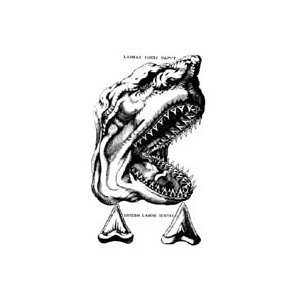
In fact, as the science of geology got started with people like Nicolaus Steno (his sketch of a shark and shark's teeth is the image for this episode), one of their first tasks was to try to evaluate the record of stones and sediment for evidence of Noah's Flood. One of the first crises in geology was dealing with the failure of this quest to find evidence for a global flood (which may or may not be an accurate translation of the intent of the writer of that part of Genesis, but that's another story).

Aug 13, 2018
Aug 13, 2018
38 min
Today was just one of those days where I needed a script to get through a three minute intro. I summarize the interview afterward.
Paul: "Welcome to Episode 20 of That's So Second Millennium.
"I'm Paul Giesting, a geologist, researcher, consultant, writer, and your co-host on this journey through the beautiful frontier country between science, philosophy, and religion as they stand here at the beginning of the third millennium. My opposite number is Bill Schmitt, a journalist, radio personality, and dab hand with the accordion.
"This week Bill managed to snag an interview with Father Robert Spitzer, who runs the Magis Center out on the West Coast and is the host of Father Spitzer's Universe on EWTN. He's published a number of books, which tend to have provocative titles; the one that I've read is called New Proofs for the Existence of God. That's an exciting read for anyone interested in the subject matter of this podcast, and travels through scientific and philsophical and mathematical arguments like the debate over fine tuning--whether Someone had to deliberately create the universe as it is, given how tightly constrained many physical constants seem to have had to be in order for any of the complex structures of atoms, planets, and stars to form and allow the appearance of life--and the question of whether it really makes any sense to speak of a "reverse infinity" and a universe that has always existed. Indian thinkers, Plato and Aristotle, and even Thomas Aquinas either thought that the universe has always existed or at the very least that there is no logical contradiction in saying that it could have always existed in time, even while Aristotle and Thomas asserted that the universe could not have an infinite chain of causes and needed a Prime Mover. Spitzer, in New Proofs, brings forward arguments from the philosophy of mathematics that perhaps this idea of a reverse infinity is not really logically coherent at all...a topic for one or more future podcasts.
"For today, Bill talked to Father Spitzer about the state of culture and the demographics of young people leaving the practice and even the identification of faith and citing as one reason the perceived contradiction between science and faith, initiatives to fight that, and the real absurdity of this perceived contradiction. With that I'll let Bill take it away."
Bill: Introduces our podcast and the motivations: value to filling holes in the culture, addressing the young.
Spitzer: Most recent Pew survey in 2016 comments on the high fraction of young people not just leaving the Church for a while, not just leaving a Church, but leaving faith altogether and becoming agnostic or atheistic. 49% of those leaving cite the perceived contradiction between science and religion as a key reason.
Bill: Proposes two reasons why that might be: was this gap "percolating" for a long time and just not being addressed, or is there a recent development pushing this.
Spitzer: It's both. The gap has been there for a long time [below the surface]. There are a lot of internet resources, social media outlets devoted to pushing an atheistic worldview. This feeds back into schools. Science teachers and professors that publicly espouse atheism meet audiences that are already primed that direction and certainly have no answers to contradict what they're being told.
One of his initiatives is crediblecatholic.com, where there is a bundle of resource modules presenting core arguments for the consistency of the Catholic faith and science and even arguments that discoveries in science point toward faith, not unbelief, in a Creator as the more sensible interpretation of reality. Pushing to get this curriculum into every diocese and every confirmation class and Catholic school curriculum.
Example topics: the Shroud of Turin, evidence for an intelligent Creator, near death experiences, evidence for a transphysical soul, 20th and 21st century accounts of miracles that have been thoroughly investigated with scientific methods.
Bill: The New Atheism is almost built on being shallow, on an attitude of mockery rather than on a serious analysis of evidence. This approach is the opposite: really multi-faceted.
Spitzer: Cardinal Newman talked about the "informal inference" to faith. It's not one argument; it's about twenty lines of reasoning. In our day we have if anything more of these, all the way from philosophical to scientific arguments to faith on the large scale to countless examples of miracles that have withstood thorough scrutiny by skeptical researchers. This is what the Credible Catholic approach is trying to convey.
We've tested the curriculum on beta groups of students in Austin, New York, Los Angeles and gotten remarkably high marks from these groups (97% positive / very positive, rated anonymously).
Bill: Pope Benedict foundation awards for "expanded reason" and the problems with positivism, scientism.
Spitzer: The logical contradiction at the very foundation of Vienna Circle positivism: it makes the self-contradictory claim that "the only valid knowledge is scientifically verifiable knowledge"...good luck checking that statement by scientific methods. That's a school of thought from the turn of the 20th century; we in the Church have been wrestling with it for a long time.
Reminiscence about a debate on Larry King Live with Stephen Hawking (et al.) and the claim that science had replaced philosophy...this is likewise straightforwardly impossible; science and philosophy do fundamentally different things. For that matter, so do science and mathematics.
Bill: A contradiction that I see more than ever: our culture and educational system is arguing for atheism and at the same time dumbing down our understanding of basically everything, while there is a growing s(S)ociety of Catholic Scientists...[a quick back and forth]
Spitzer: Artificial intelligence's potential is overrated when it is claimed that it can become creative in anything like a human fashion. It can't find new truths; they don't love [or will] or have any of the transcendentals. Computers are marvellous tools that, *in tandem with us*, can take us to new places we could not get without this kind of effort multiplier...
Studies on religious and non-religious affiliated groups, with the latter having much higher rates of maladaptions: suicide, substance abuse, impulsivity, depression, etc. Augustine's comment about our hearts being restless until we rest in God seems to be empirically corroborated.
Closing: CredibleCatholic.com, Notre Dame initiatives to educate high school science teachers on the interrelations between faith and science.
"So there we have it. I also want to thank Father Spitzer for taking the time to give this interview. We hope to present many more interviews as That's So Second Millennium matures and gets going. The point of the podcast has always been to get conversations started about these core issues, whether and how to be a logically coherent believer in the modern age. It's started with these conversations between Bill and I, but the point is to move outward and engage with more of you. The time is rapidly coming to expand this outreach another step or two, through social media and ordinary human interactions. Right now you can check out the Facebook page for That's So Second Millennium, and you can leave ratings and reviews on one or more of our podcast servers, Apple, Google Play, Stitcher, or Podbean."

Aug 6, 2018
Aug 6, 2018
47 min
We pick up from last week's episode with the next speaker. Kara Lamb followed Andrew Sicree; her research is about the atmosphere and climate. She mostly talked about climate, and got a ways into specifics about her research on black carbon soot in the atmosphere. She did stop to draw a parallel between Laudato Si and Pacem in Terris, that in both cases the Popes stopped to address humanity at large and not just the Church.
Juan Martin Maldacena was after her, and was presented the St. Albert Award. You don't schedule Juan Maldacena and not have him talk about his own physics research; he is famous for research on workable forms of string theory in anti-de Sitter space and some results on the shape and nature of black holes. His talk was very technical and rather hard to summarize, but an intriguing aspect of it was the recurring notion that black hole singularities and the original singularity of the Big Bang might have a lot in common.
Sunday morning after Mass Michael Dennin led off with a talk structured around a book called "The Big Picture" by somebody I think I've heard of but don't know why named Sean Carroll. In this book Carroll apparently divides reality into "poetic naturalism", where "poetic" means "stories we tell ourselves about large complicated objects" and "naturalism" means "quantum physics, which is actually reality". Dennin made four points:
- Emergence. Reality does not appear to be just quantum physics (or, I would elaborate, not even just a unified theory that somehow gets gravity and relativity united with quantum physics). There are really new laws that emerge as you go to larger, composite, varied objects...the laws of thermodynamics, entropy in particular, are an example.
- Physical reality. It's a little much to talk about "reality" so cavlierly; it ignores basically metric tons of philosophical questions people have spent centuries debating. Is physical reality basically sense data? Is it the particles we theorize to be out there to explain, ultimately, our sense data in the context of the experiments we do and the natural objects we observe? Isn't there nonphysical reality: mathematics, wavefunctions (they can't be completely physical), conscious reality / qualia? How can we be sure there aren't nonphysical "forces" acting on physical objects? In some way, don't they have to? (mathematics and logic in some way constrain reality, that's a rumination of mine while writing this)
- Free will...the Comptonesque observation that quantum physics leave room for this nonphysical soul or mind to affect the physical body
- MIracles. Dennin actually led off the talk with an exercise, asking us to define miracles, and then he went on a fairly vigorous campaign against the idea that miracles ever incorporate the violation of physical law, or at least that they require it, that that should be in the definition. I noted "Contrasting focus on God's will/purpose..." but I cannot really reconstruct what he seemed to be driving at.
Craig Lent, a professor at Notre Dame, went next and gave an interesting talk that interfaced with others. He actually seemed to conflict with Barr in that he commented early on that the "state vector," which had be be the wavefunction since it had the same Greek letter psi for its symbol, contained all the information possible to have about a system and not just one observer's (the concept Barr used). He also addresses the measurement problem, but my note broke off mid-sentence. He went on to summarize the content of Scarani's talk, that Bell inequality experiments all show that the universe is not deterministic. He then addresses the claim that while atom-scale particles show quantum indeterminism, larger stuff does not, and nerves are enough larger that the human brain must be deterministic. That's probably not true; even 10,000 atomic mass unit molecules like neural transmitters show quantum behavior in experiments. We are left again with the Arthur Compton point that while obviously physics constrains us, our brains are not deterministic machines; if our souls are not affecting them, then at the very least some of their functionality is random.
The final talk was by (Padre) Javier Sanchez-Canizares on "Mind, Decoherence, and the Copenhagen Interpretation." This again comments on many of the topics in previous talks. Unfortunately the talk seemed to paw about problems already discussed without coming to any new realizations. I cannot tell from my notes whether I learned anything about decoherence, which I was really hoping to do; I think I had to look it up afterward, and even then the answers I've found so far are not satisfying. He asked the "Wigner's friend" question that Barr mentioned about the "cut" between the observer and the system in a quantum physics observation. He also made some intriguing comments on the nature of classical physics: if quantum physics is reality, why is it so hard to get rid of classical physics terminology? We still describe things that way. A recent physicist, Zurek, comments that classical physics entities somehow embody a "survival of the fittest" (the sort of comment I start questioning for influence of the divine name of evolution). Heisenberg apparently said that classical physics terms are just unavoidably part of how humans interact with the world.
Jul 30, 2018
Jul 30, 2018
45 min
As I've mentioned, we batch recorded the last four episodes about a month ago, and so we opened with a retrospective on the conference as a whole and its significance.
We moved on to discuss Peter Koellner. Koellner was the next talk and probably deserves his own podcast. I have gotten his lecture slides from him but won't have time to analyze them for a few weeks. The short version for now is that he gave us some perspective on Godel's theorem, a result in mathematical logic that many (including many agnostics like the physicist and mathematician Roger Penrose) have taken to imply that human thought must transcend any finite logical system that could be, say, programmed into a computer: in other words, the human mind is not a computer. Koellner argued, in large part from Godel's own writings, that what he actually proved is probably that EITHER human thought transcends the mechanical OR that there are mathematical truths that transcend mind. This is potentially a blow to a number of people who rely on the argument to prove our superiority to our own machines, but I myself find either conclusion to be exciting.
Andrew Sicree was next. He gave this tremendously gung-ho talk about Father Nick Steno, the 17th century member of the founder's club of geology (I think that's fair; Sicree basically called him the founder, singular). It was mostly fairly familiar stuff to me, some of which I have lectured on myself in classes in passing. He is still known today for Steno's Laws of stratigraphy (i.e., the relative ages of rocks):
Principle of Superposition
Principle of Original Horizontality
Principle of Inclusions
and in mineralogy he is remembered for the Law of Constant Interfacial Angles, basically the very dimmest beginning of crystallography. However, Sicree gave some time to other aspects of Nicolaus Steno's thought and also to his career as a layman and cleric. I only thought I was a Nick Steno fan before this talk. Andrew Sicree is the real deal.