
Taking science AND faith seriously.
Episodes
Dec 20, 2021
Dec 20, 2021
53 min
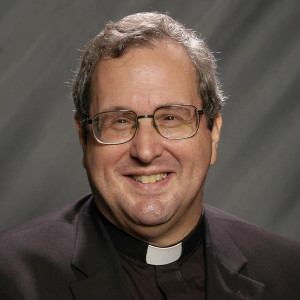
- Paul and Bill were privileged to talk with Father Robert Spitzer, SJ, the founding director of the Magis Center in Orange County, California.
- Father Spitzer’s biography includes service as the president of Gonzaga University and the authorship of numerous books about various aspects of theology, philosophy, spirituality, apologetics, happiness and the meaning of life, and much more.
- He has produced a huge collection of materials for online use. His main websites are the Magis Center site, com, and PurposefulUniverse.com. In this interview, he describes the sites and how our listeners can select and use materials that may be particularly helpful.
- We discuss the four levels of happiness, which represent an insightful roadmap for spiritual growth and movement toward a culture of life. His excellent book, Healing the Culture, gives a good grounding in this approach.
- Another area of special interest for Father Spitzer is the compatibility of appeals to science and faith—which is also a basis for this TSSM podcast series. In this interview he notes that younger scientists are statistically more likely to believe in God than scientists over age 40.
- Young people don’t know what’s going on in current science, in studies of near death experiences, scrutiny of the Shroud of Turin, and many other areas of research that contribute to religious faith. A good grounding for his work connecting science and faith in Jesus Christ is New Proofs for the Existence of God .
- Yet another area of deep interest for Fr. Spitzer is the need for a full appreciation of, and deep personal engagement with the summit of the Catholic faith, the Holy Eucharist. In this interview, he refers to the John 6:30-52 as a portion of Scripture that powerfully asserts the Catholic understanding of the Blessed Sacrament as the body and blood of Christ.
- You can see Fr. Spitzer on EWTN in his weekly series, “Father Spitzer’s Universe.”
Nov 22, 2021
Nov 22, 2021
45 min
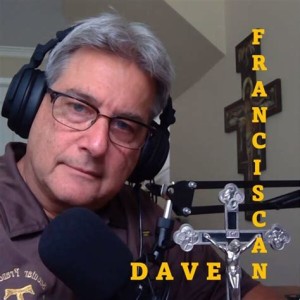
David Seitz, OFS, is a long-time professed member of the Secular Franciscan Order who holds an M.A. in theology from Sacred Heart Seminary in Detroit. He has written a book, available on line, called Come Let Us Worship: Reflections on the Words and Prayers of the Mass. He produces podcasts, videos, blogs, and speaks publicly, offering reflection for spiritual growth based on the life and works of St. Francis of Assisi. Find him at tauministries.com and, on YouTube, look for his nickname, Franciscan Dave.
Bill, also a Secular Franciscan, recently appeared on Dave's podcast, and I spoke with Bill about that conversation regarding journalism and virtuous communication. We discuss whether missionaries and scientists are also journalists and the spiritual value of seeking and spreading truth. Be sure to find their original conversation at Dave's site.
Oct 28, 2021
Oct 28, 2021
11 min
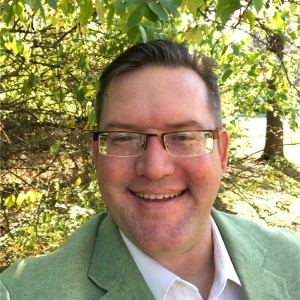
Here's our pre-conversation with Matthew Cloud prior to the full interview. In this segment we talk a little bit about the Ubuntu distro, the ubuntu philosophy of computer science, and 4th and 5th generation tools for generating working code to solve computer science problems in the context of Matthew's role connected to a grant for cybersecurity education through Ivy Tech and other schools in several states.
Oct 5, 2021
Oct 5, 2021
52 min
- Paul and Bill discussed computer education and cyber-security with Matthew Cloud, professor of the practice in the computer science program at Holy Cross College in Notre Dame, IN.
- Cloud has extensive experience in education, not only through classroom teaching at schools including Indiana’s Ivy Tech network of community colleges, but also through project management, curriculum development, and strategic collaborations with other a range of colleges and universities. Cloud holds a bachelor’s degree from Texas A&M University and a master’s degree in biomedical engineering granted jointly by the University of Texas and the UT Southwestern Medical Center.
- He is working within the Holy Cross College science department to grow a distinctive undergraduate program in computer science. Through a different understanding of essential skills and characteristics, such a program could increase access to meaningful information technology careers among students with more diverse backgrounds of knowledge, training, interests, socio-economic resources, etc. Increasing the access to such positions offers advantages to the students, to companies with growing IT and cybersecurity needs, and to the safety and sustainability of societies. You can go to cyberseek.org and get the latest estimates of how many US cybersecurity jobs are currently open, waiting for applicants. Prof. Cloud says that number has been hovering around 500,000.
- One of the multi-school projects he is helping to lead is funded by a grant from the National Centers of Academic Excellence in Cybersecurity. His focus on a win-win balance between the demand for tomorrow’s computing/AI/cybersecurity/data science professionals and the supply of motivated, well-trained students pursuing these fields takes the form of several partnerships funded by prestigious grants.
- The goal of attracting more US students, of all backgrounds, into computer-related studies, whether they be focused on engineering or on different fields of study (including the liberal arts, philosophy, and more), is being pursued by many institutions. You can visit http://code.org to see one approach for encouraging young people to consider a computer-related career.
Sep 13, 2021
Sep 13, 2021
27 min
A solo episode from Paul today inspired by the content of Wyoming Catholic College’s Deductive Reasoning in Science course (SCI 301).
- Greek arithmetic and the Pythagoreans
- The crisis of incommensurables (irrational numbers)
- The triumph of geometry over arithmetic
- Emphasis on axiomatic systems and proofs: Euclid
- Archimedes: physics within the Euclidean paradigm
- Aristotle and the medieval: qualitative and categorical accounts of motion
- The long reach of ancient methods and paradigms
- Galileo and his big ideas, shaky proofs, and tedious Euclidean methodology
- 16th century algebra and the need for negative numbers to simplify the cubic equation
- Galileo’s multiple cases of proportions of times, spaces, speeds in the Euclidean paradigm
- Overturns in algebraic notation and the advent of analytical geometry in the 17th century
- The looming role of calculus in Galileo’s attempts to argue by means of infinite parallels
- Imaginary and complex numbers in the solution of cubic equations with real roots, real physical problems
Aug 23, 2021
Aug 23, 2021
50 min
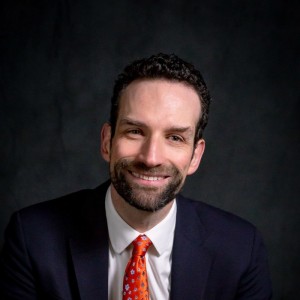
- Jordan Wales, PhD, who teaches theology at Hillsdale College in Michigan, spoke with Paul and Bill about his research at the intersection of robotics and religion.
- He discussed a compelling concern in the future relationship between human beings and technology. In particular, the concern, about which he spoke at the 2021 conference of the Society of Catholic Scientists, dealt with the interaction between individuals and the entities Wales calls “apparently personal artificial intelligence” (APAI).
- APAI products are already becoming commonplace in the world of commerce, as this BBC article discusses. People will be increasingly able to purchase, and interact with, virtual friends or babysitters or therapists, for example, Dr. Wales pointed out.
- This raises moral questions related to personhood, covering both the APAI product and the user of that product. The product will not have an inner life representative of what we think of as a person, although the definition of person has an interesting history influenced by scholars such as Saint Augustine. Human beings can express and influence their own understandings of personhood through their interactions with APAI. These understandings may lead to various types of interaction, ranging from pride and manipulation to excessive empathy, and one middle ground would consist of appreciation for the humanity that underlies the production and information/formation of the APAI product, Dr. Wales pointed out.
- As the use of APAI grows, there are also concerns about how the aggregated human “input” into the experience of APAI personalities may cause a flattening-out of human perspectives on the unique qualities of each person. One current example of the trajectory for these concerns comes from the use of the auto-correct feature by Google for writing. Long-term possibilities include such features of interactions not only affecting our choices of words and expressions, but also influencing what subjects we think about and how we think about them. This highlights the moral principle that ultimately we must retain our unique personal identities and wisely discern how to exercise our responsibility and restraint in allowing some possible applications of APAI to influence us, Dr. Wales said.

Aug 9, 2021
Aug 9, 2021
35 min
- Welcome to this 130th episode of our podcast. Here’s a lively conversation between two geoscientists—testifying to the opportunities for Society of Catholic Scientists (SCS) members to enjoy discussions which are at once elevated by their personal values and grounded in their diverse, expert explorations of God’s creation.
- Paul spoke with Natasha Toghramadjian, a Ph.D. student in geophysics—and seismology in particular—at Harvard University. She performs wide-ranging research on earthquake dynamics and risks in California and around the world. She spent a year in Armenia on a US Fulbright research grant to design a study on future earthquakes there and the connection between risk preparedness and regional politics.
- Toghramadjian, a student member of the SCS, was a speaker at the 2021 national conference in Washington, DC. See the video of her talk here, at about the 7-hour, 19-minute mark. The talk was titled, “Earthquakes, their Consequences, and the Jesuit Pioneers of Seismology.”
- This podcast conversation included Toghramadjian’s mentions of the earthquake hazards in Oklahoma and the Newport-Inglewood Fault in California, considered more dangerous than the San Andreas Fault for the Los Angeles region. A note from Natasha: at one point just before the 16 minute mark, she said "40 meters" when she meant "40 miles onshore."
- She discussed with Paul the common but wrong view that we hold Christian beliefs despite natural evidence. Scientists use natural evidence, including the enduring laws of physics, chemistry, and biology, in their attempts to understand God’s creation more fully. The two agreed that science and religion are in harmony as paths for pursuing the truth amid great mystery.
- A “keeper” quote from Toghramadjian: “Every human you encounter is an imperfect representation of whatever they say they stand for. . . . It’s very easy to point to a bad example, a person, rather than point to the source material that we’re all trying to follow but we all inevitably fall short of because we’re fallen.”
Show notes prepared by TSSM co-host Bill Schmitt

Aug 8, 2021
Aug 8, 2021
1 min
Word on Fire will be holding a Faith and Science Summit August 9-12 (starting tomorrow!). It will feature at least nine speakers, including the SCS' own Jonathan Lunine and Karin Oberg.
Among the topics discussed will be
- The history of the Church and science, including a wealth of details that get glossed over by the "conflict hypothesis"
- Specific coverage of what went wrong between the Pope, cardinals, and Galileo, and why that's far from a typical example of how the Church treats scientists
- The counterexample of George LeMaitre
- Theological motivations *for* doing science from the perspective of the Christian faith
- Insights from science that have enriched our appreciation of creation, the physical universe, and our own human origins
- Catholic theology and speculation about the possibility of extraterrestrial life
Find out more at:
https://wordonfire.institute/faith-and-science-summit
If you're a Word on Fire Institute member:
https://wordonfire.institute/faith-and-science-summit-wofimembers

Jul 26, 2021
Jul 26, 2021
16 min
Paul gives an update on his move to Wyoming to take a faculty position at Wyoming Catholic College. We are looking forward to bringing you more Society of Catholic Scientists conference speaker interviews in August.
Jul 12, 2021
Jul 12, 2021
46 min
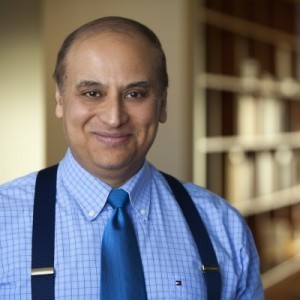
An intriguing interview with a business school professor from Paul's alma mater, Anjan Thakor of the Washington University in St. Louis Olin Business School. The point of departure for this episode is Prof. Thakor's book of the same title written with Dr. Bob Quinn, and the book was launched as an analysis of why Dr. Quinn left a prestigious faculty position at the University of Michigan to go start a church in Australia.
The book and our interview discuss what seems as if it should be common sense: people perform better when they believe what they're doing has a higher purpose than extracting paychecks and profit. Yet this common sense observation is now counter to decades of economic orthodoxy, both in the "practical" world and in academia, which focus on evaluating ways for employers to control and coerce employees using the tools of the market system. And it's not entirely surprising, since in many ways human nature is always poised to devolve into this style of interaction. Listen in and, if you're anywhere near as intrigued by this work as I was, read their book for more.
- Thakor co-authored The Economics of Higher Purpose: Eight Counterintuitive Steps for Creating a Purpose-Driven Organization with Robert Quinn, business professor emeritus at the University of Michigan.
- Thakor referred to a University of Michigan study of call-center workers. They came away with a higher sense of purpose—and effectiveness—after talking with students who had received scholarships based on fund-raising efforts in which the workers were participating. If you change a worker’s mental map for seeing their job, this affects their performance.
- Authenticity requires a business leader’s believable commitment to—and passion about—the organization’s higher purpose, Prof. Thakor said. He also referred to insights from Rabbi Jonathan Sacks about the importance of societal and organizational motivation stemming from a sense of covenant, not merely contract. Covenant entails a sense of shared purpose.
- Noted business executive Bob Chapman says 88 percent of American workers say they want a sense of higher purpose but don’t feel it is integrated in their work life. Thakor said his own research shows that employees whose companies have a sense of purpose are more likely to describe a sense of purpose in their lives—a spillover effect.
- The commitment to purpose must be top-down. Then, it cascades through the organization if you help employees learn and absorb what it means for them and their job, Thakor said.
- Harvard Business Review had a special issue on the importance of a sense of purpose.