Taking science AND faith seriously.
Episodes
Jun 4, 2018
Jun 4, 2018
31 min
Bill and Paul dive into a very simple question posed by Bill over email: "Please describe more what is intellectual citizenship?" That of course opens up a question that lurks behind every issue we discuss, and any philosophical or religious question touches upon, which is what we owe the universe, its Creator if it has one, and each other. We can't learn everything about everything, and we must make choices what to spend our time on.
In the political system we inhabit, in the U.S. and other contemporary representative democracies, we choose whom to trust to make decisions for us. There is a tendency to think about our choices in voting as a process of simply matching up policy preferences, but that leaves out of consideration the very important human question of which candidate will actually act on his or her stated policy preferences and do so effectively.
In our awareness of the broader world, when we give our allegiance to science, it's good to have an idea to what sort of thing we are pledging ourselves. Different sciences are at different stages of development and are more or less ripe for further paradigm shifts. Those paradigm shifts may come more or less "off in the distance," where they may or may not affect how we solve practical problems. The paradigm shifts we've discussed in physics didn't change how civil engineers made their calculations, but the plate tectonics revolution in the 1960s did have practical ramifications for economic geology and hazards assessment, just to name two things. The human sciences of economics, sociology, and psychology are good examples of sciences that are ripe for paradigm shifts. Indeed, currently, they are in the really unstable situation of having multiple competing paradigms.
When we apply science to a practical question, like the issue of climate change, being a good intellectual citizen means gaining at least some awareness of the different parts of the problem and the degree to which our experts can express certainty on each issue. Climate change requires at least three big components. First, we need the basic thermodynamics of how air and water respond to heat, how they move and mix. On that abstract level of physical laws, we have great certainty. Second, we need detailed data on the temperatures, wind speeds, air composition, etc. all across the planet. On that level, we have a great deal of data, but not as much as we could conceivably want. Third, we need models that run on as dense as possible a cluster of node points, which is to say models that divide up the atmosphere, land, and oceans into the largest number of little boxes possible; and likewise, models that take into account as much of the physics as possible, and not just a few of the elements. This is the really hard part, even with the computing resources we now have.
Bill wraps up the episode by noting how daunting we have made the question of intellectual citizenship and also how important the question of models is whenever we try to apply science...and maybe any body of intellectual knowledge...to our problems. We will take these questions as our point of departure for the next episode.
May 14, 2018
May 14, 2018
30 min
Science’s origins in “natural philosophy”
Tension between Aristo-Thomist metaphysics, post-Cartesian idealism and Kantian/Humian criticism and etc., and science
Philosophy of science: what is it?
My own introduction: Popper and falsification key, Kuhn and the sociology of science revolutions / paradigm shifts
Tendency to exaggerate contrasts and play down common elements between them
Quantum foundations, classic experiments leading to quantum physics, wave-particle, uncertainty principle – falsifying classical physics, bringing about a new paradigm
Existing paradigms of classical physics & chemistry:
Light is definitely a wave phenomenon, period. It displays diffraction / interference effects that only make sense for waves, not little shooting corpuscules a la Newton
The electrons (protons and neutrons not being discovered yet) are particles with a given mass, location, charge, velocity.
Classical failures of light
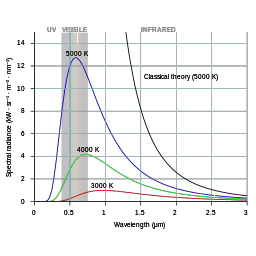
Why do hot objects give off light, or rather, how? Classical physics applied to this problem winds up with a completely unworkable “ultraviolet catastrophe” where all objects at all temperatures have a frequency – intensity curve that shoots off to infinity.
Why do photoelectric materials only shed electrons once light of high enough frequency hits it? That makes no sense; it should be the brightness / intensity of the light that matters, right?
Apr 23, 2018
Apr 23, 2018
40 min
Paul elaborates on how the hylomorphic principle, if anything, fits quantum physics better than it fit the world the medievals knew. Bill asks whether the worldview of people of faith is too rigid, while that of the secular masses is too loose. Paul wonders what "shades of gray" really means, and points out that even though the materialist worldview has become harder and more dogmatic, 20th century physics really exploded its scientific foundation. This epsiode brought to you by Arthur Compton's Freedom of Man and Stephen Barr's Modern Physics and Ancient Faith.
Apr 16, 2018
Apr 16, 2018
36 min
Bill and Paul talk about whether the old convention of hylomorphism at least initially seems to describe the world of quantum physics, the medieval dispute over plurality of forms, and the degree to which science and philosophy became delinked in the late second millennium.
Apr 9, 2018
Apr 9, 2018
29 min
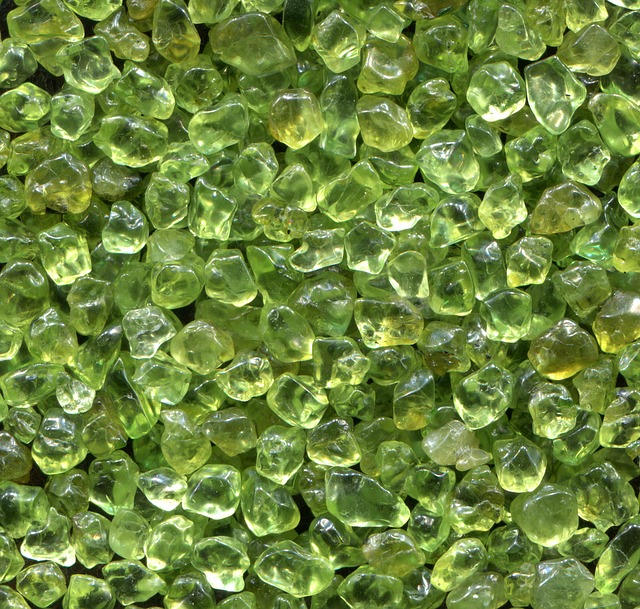
What is metaphysics, and is it any more relevant to modern life than Casper the Friendly Ghost? Paul discusses how the ancient metaphysical framework of matter and form (hylomorphism) involves some tricky terms for us moderns but can still make sense of some examples of scientific issues from mineralogy and zoology. Next week we see if it can cope with undergrad quantum physics...
Mar 27, 2018
Mar 27, 2018
51 sec
Is it really true that science and religion are polar opposites? Must one be true and the other false? What must the universe be like if BOTH are true at the same time? Join Bill and Paul, a Catholic journalist and scientist, as we explore intellectual ground millennia old and cutting edge, from the realms of physics, philosophy, neuroscience, psychology, geology, and more from the perspective of people who take their faith AND their science seriously.